AI Search Visibility
AI Search Marketing Plan: A 90-Day Template for Teams
A 13-week AI search marketing plan covering baseline tracking, content fixes, third-party mentions and reporting, with decision tables and a worked example.
 Simran Rawat13 Nov 202617 min read
An AI search marketing plan has four workstreams run over 13 weeks: a baseline of where AI engines name your brand, fixes to the pages those engines read, earned mentions on sources they cite, and weekly reporting. Weeks 1 to 2 measure, weeks 3 to 8 fix content, weeks 5 to 12 earn mentions, and week 13 resets targets. Noma by Nurdd supplies the baseline and the weekly measurement.
An AI search marketing plan is a 90-day schedule that tells a team what to measure, fix and earn so AI engines name the brand when buyers ask category questions. Build it in four workstreams: baseline tracking, content fixes, third-party mentions and reporting. Start by measuring, because you cannot prioritise fixes until you know which prompts and engines already mention you.
Key takeaways
- Spend weeks 1 and 2 on a baseline: a fixed prompt set, run across several AI engines, recording whether your brand is named and which page is cited.
- Fix access and measurement first (crawlers, sitemaps, analytics), then fix the pages that answer your highest-value prompts.
- Treat third-party mentions as a separate workstream with its own owner, starting around week 5 once you know which sources the engines cite.
- Review the same prompt set every week, but change only a few things at a time so you can tell what moved the numbers.
- End day 90 with a reset: compare against the baseline, keep what worked, and write the next quarter's targets.
- Do not wait for traffic to prove the plan. Mention rate and citation share move first; referral traffic follows and is only part of the picture.
Why does an AI search marketing plan need its own 90 days?
Buyers now get a shortlist from an AI answer before they ever see a results page, and your SEO reports will not show whether you are on it. A separate plan gives the work an owner, a baseline and a review date. Without those, AI visibility becomes a side task that nobody can show progress on.
The click data explains the urgency. Pew Research Center, July 2025 found that Google users who saw an AI summary clicked a traditional result link in 8% of visits, and Search Engine Land, July 2025 reports the comparable figure for pages without a summary was 15%. Separately, Ahrefs reports that, as of December 2025, AI Overviews reduce the organic click-through rate for position-one content by 58%. When clicks shrink, being named inside the answer matters more.
The engine mix also keeps shifting. Similarweb, 2026 reports ChatGPT's share of generative AI website visits fell from about 76% in June 2025 to roughly 53% by May 2026, with Gemini passing a quarter of traffic. A plan built around one engine will age quickly, so the baseline should cover several. For the definitions behind this, see our explainer on generative engine optimization, GEO vs AEO vs SEO.
What should an AEO plan include for the first 90 days?
An AEO plan for the first 90 days should include four workstreams, each with an owner, a weekly output and a success test. The table below is the skeleton; the rest of this guide fills it in.
| Workstream | Weeks | Owner | Weekly output | Success test at day 90 |
|---|---|---|---|---|
| 1. Baseline tracking | 1 to 13 | SEO or analytics lead | Mention rate and citation list for the fixed prompt set | Mention rate above the week 2 baseline on the same prompts |
| 2. Content and technical fixes | 1 to 8 | Content lead plus web developer | Pages shipped or updated, crawler and analytics fixes closed | Every top-priority prompt has a page that answers it directly |
| 3. Third-party mentions | 5 to 12 | PR, partnerships or influencer lead | Outreach sent, mentions earned on cited sources | Brand present on the sources the engines cite for your prompts |
| 4. Reporting | 1 to 13 | Marketing manager | One-page weekly note, monthly report | Day 90 review with next-quarter targets agreed |
Notice what is not in the table: keyword rankings, domain authority and word counts. They still matter for classic SEO, but none of them tells you whether an AI engine named you. The plan's metrics are mention rate, citation share and the pages cited, which we cover under reporting below.
How do I build an AI search marketing plan, step by step?
Build the plan in seven steps. Each step below gives the action, the result you should have afterwards and the reason it comes in that order.
Step 1: Choose the prompt set and the engines (weeks 1 to 2)
Action: write 30 to 50 prompts a buyer would type, grouped by intent: category (best tools for X), problem (how do I fix Y), comparison (A vs B) and use case (for a team of Z). Pick the engines that matter to your buyers. Result: a locked prompt list, saved with a date. Why: if the prompt set changes every week, your trend line is meaningless.
One published 90-day plan from Deepak Gupta, November 2026 update uses 30 priority queries split across category, problem, comparison and use-case types. That is a sensible floor for a first quarter. Our guides on which prompts to track and how many prompts you need go deeper on selection.
Write prompts in customer language, not in your product's vocabulary. The Peec AI blog discussion with SEO practitioners makes the point that prompts are far more unique than keywords, so treat the set as a sample of buyer intent, not a list of search volumes.
Step 2: Record the baseline in Noma (weeks 1 to 2)
Action: load the prompt set into Noma and let it poll. Noma by Nurdd tracks 13 AI engines, including ChatGPT, Gemini, Perplexity and Claude, polled daily, and shows citation frequency by category and a competitor comparison. Result: by the end of week 2 you have your starting mention rate per engine, per prompt group, and the competitors named instead of you. Why: every later decision, from which page to rewrite to which publication to pitch, depends on that starting picture.
Record three numbers from the baseline and freeze them in a document: mention rate (prompt and engine checks where the brand is named, divided by total checks), citation share (your pages among all cited pages) and competitor mention rate on the same checks. Our guide to AI search share of voice shows how to calculate the competitor comparison.
Step 3: Fix access and measurement (weeks 1 to 3)
Action: confirm AI search crawlers can reach your pages, submit sitemaps, and set up analytics for AI referrals. Result: a clean technical floor and a place to see AI-referred visits. Why: content fixes are wasted if a robots.txt rule or bot-protection setting blocks the crawler that feeds the engine.
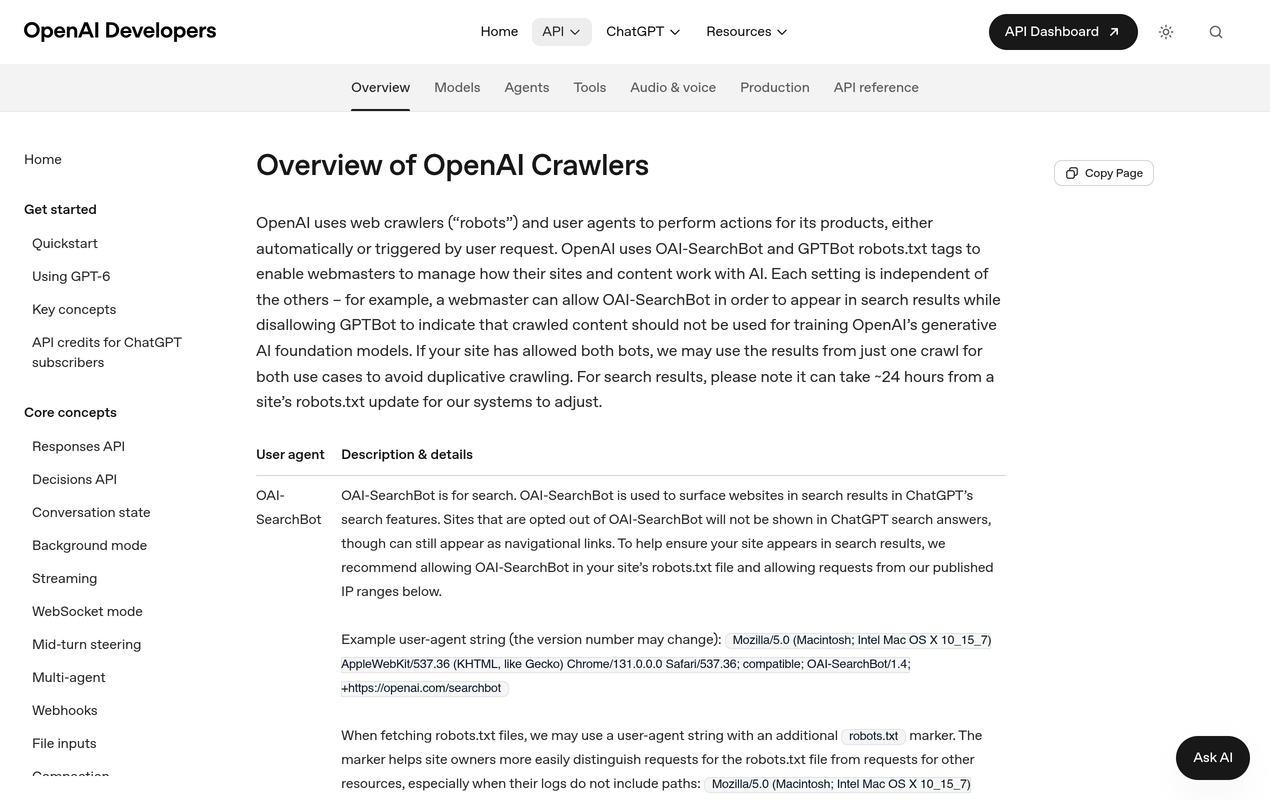
OpenAI's crawler documentation says that to appear in ChatGPT search results, site owners should allow OAI-SearchBot in robots.txt and allow requests from its published IP ranges. OpenAI treats OAI-SearchBot and GPTBot as separate robots.txt tags, so blocking one is a different decision from blocking the other. Our AI crawler user agents list covers the other engines.
For measurement, the plan from Deepak Gupta notes that GA4 added a native AI Assistant channel in May 2026, and suggests a backup custom channel for sources such as chatgpt.com and perplexity.ai. Our guide to measuring AI referral traffic in analytics walks through the setup. Expect the numbers to understate influence: the Peec AI discussion above notes that an AI answer can shape a decision that later shows up as direct or branded traffic.
For Google specifically, Google Search Central, June 2026 announced Search Generative AI performance reports in Search Console. They show impressions, pages and countries for URLs that appeared in AI Overviews and AI Mode, and Google said the rollout began with a subset of sites, so check whether your property has it.
Step 4: Fix the content that answers your priority prompts (weeks 3 to 8)
Action: map each priority prompt to the page that should answer it, then rewrite or create that page so the answer appears in the first paragraph, with specifics, a named entity and a source. Result: each high-value prompt has one clear answering page. Why: engines retrieve passages, and a page that buries the answer or never names your brand gives them nothing to quote.
Google's own guidance frames the work as ordinary good SEO. Google Search Central, checked November 2026 says its generative AI features are rooted in core ranking systems, and describes query fan-out, where the model runs related searches to gather more results. That is a reason to cover the adjacent questions around each prompt on the same page or a linked one.
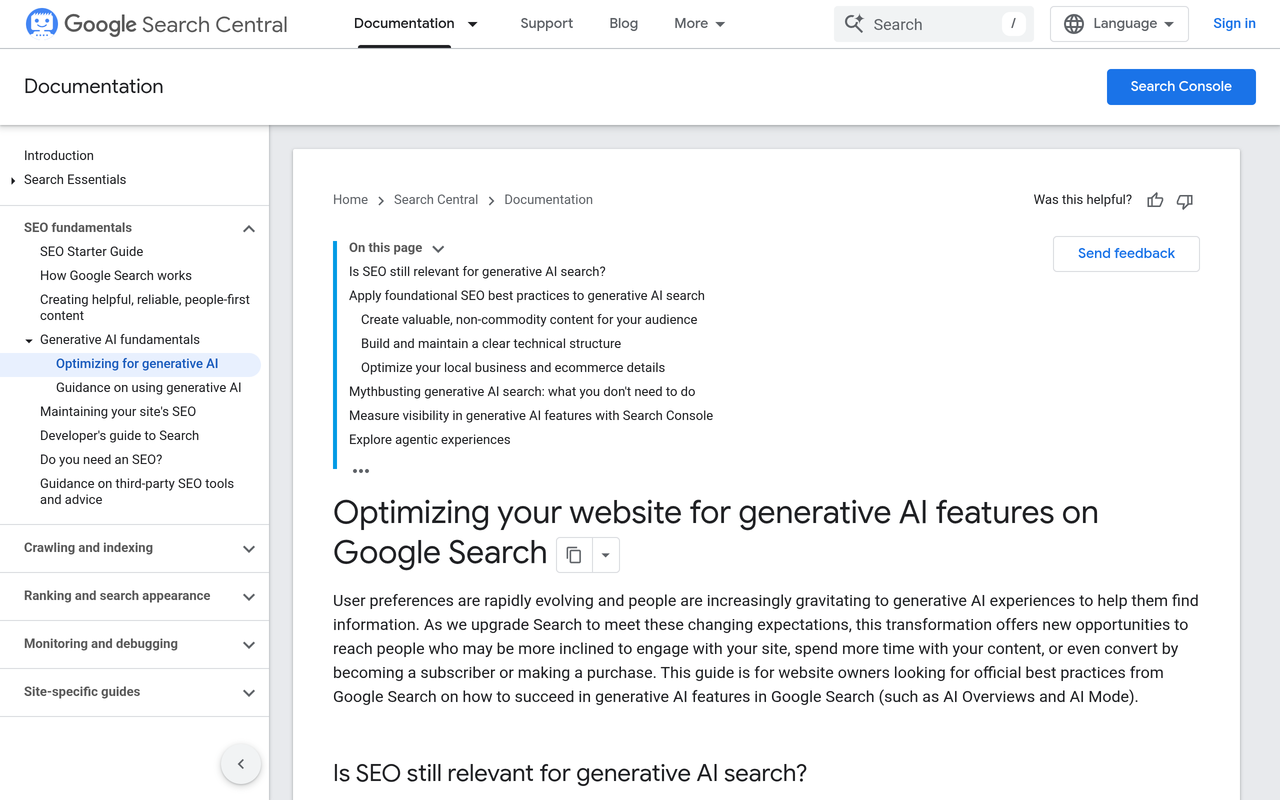
The same Google page is useful for ruling out busywork. It says Google Search does not use llms.txt files, that there is no requirement to chunk content for AI, and that no special schema is needed for generative AI search. The Gupta plan cites an Ahrefs study finding 97% of llms.txt files received no requests in May 2026. So treat llms.txt as optional, put it last, and spend the hours on page content. For examples of rewrites, see our before and after content examples.
Step 5: Earn third-party mentions on the sources engines cite (weeks 5 to 12)
Action: take the citation list from your baseline, find the non-owned sources (review sites, publications, forums, creator content, directories) that engines cite for your prompts, and plan one earned placement per source type. Result: a short outreach list ranked by how often each source is cited. Why: engines assemble answers from several pages, and a brand that appears only on its own site is a weaker candidate than one that is also described by others.
Be careful about method. Google's guide warns that seeking inauthentic mentions across the web is less helpful than it seems, because its systems favour high-quality content and block spam. Earn mentions the ordinary way: useful data, expert commentary, accurate listings, partner pages and creator content. Keep your brand description identical wherever it appears; the entity consistency checklist and the guide to Wikidata and sameAs cover this, and getting mentioned in AI answers without ads lists the tactics that do not need a budget.
Step 6: Run a weekly measurement loop (weeks 3 to 13)
Action: every week, at the same time, open the Noma dashboard, check mention rate and citations for the fixed prompt set, and log what changed on the site or in outreach that week. Result: a running record that links actions to movement. Why: AI answers vary between runs, so a single check proves nothing, while a weekly trend across a stable prompt set shows direction.
Because Noma polls daily, the weekly review reads from accumulated data rather than a one-off spot check. Keep the review to 20 minutes: which prompt groups moved, which engines moved, which competitors appeared or dropped, and which cited pages are new. Our four-week ChatGPT test plan is a smaller version of the same loop.
Step 7: Report monthly and reset at day 90 (weeks 4, 8, 12, 13)
Action: send a one-page report at the end of each month, then hold a day 90 review that compares against the frozen baseline. Result: agreed targets for the next quarter. Why: a plan without a review date drifts, and executives fund what they can see.
Use the same four blocks every month: mention rate versus baseline, citation share and top cited pages, work shipped, and next month's priorities. The AI search monthly report guide and the piece on what executives need in an AI search visibility dashboard give layouts.
What does the 13-week schedule look like?
The schedule below turns the seven steps into weekly work. It assumes a small team and one person owning each workstream, and it can be copied into a project tool.
| Week | Baseline and reporting | Content and technical | Third-party mentions |
|---|---|---|---|
| 1 | Draft prompt set, choose engines, start Noma trial | Audit robots.txt and bot protection, submit sitemaps | None yet |
| 2 | Lock prompts, freeze baseline numbers | Set up AI referral tracking in analytics | None yet |
| 3 | First weekly review | Map each priority prompt to an answering page | None yet |
| 4 | Month 1 report | Rewrite first three priority pages | List cited non-owned sources from baseline |
| 5 | Weekly review | Rewrite next three pages, fix entity details | Rank sources by citation count, assign outreach |
| 6 | Weekly review | Publish gap pages for missing prompts | Send first outreach batch |
| 7 | Weekly review | Add data, quotes and sources to key pages | Correct or claim listings and profiles |
| 8 | Month 2 report | Content freeze for the test window | Second outreach batch |
| 9 | Weekly review, compare changed and unchanged pages | Fix only what the data flags | Follow up, publish own data or commentary |
| 10 | Weekly review | Refresh pages that lost mentions | Brief creators or partners on accurate descriptions |
| 11 | Weekly review | Close remaining technical issues | Third outreach batch |
| 12 | Month 3 report | Prepare next quarter's page list | Log earned mentions and their sources |
| 13 | Day 90 review against baseline | Retire what did not help | Set next quarter's source targets |
Which fix should come first? A decision table
Teams lose weeks fixing the wrong thing. Use the table below after the baseline: find the pattern you see, then take the matching first action. It is our own framework, built from how the workstreams depend on each other, not a published benchmark.
| What the baseline shows | Likely cause | First action | Workstream |
|---|---|---|---|
| Brand never named on any engine, and no cited pages from your domain | Crawlers blocked or pages unreadable | Check crawler access and rendering | Technical |
| Named on one engine but not others | Engine-specific sources or crawler rules | Check each engine's crawler access, then its cited sources | Technical, then mentions |
| Your pages cited, but competitors named more often | Pages answer the question but do not make the brand the answer | Name the brand and its differentiators in the opening answer | Content |
| Competitors cited from third-party sources you are absent from | Missing earned mentions | Pitch or claim presence on those exact sources | Mentions |
| Brand named, but described wrongly | Inconsistent descriptions across the web | Align brand description and entity details everywhere | Content and mentions |
| Strong on category prompts, weak on comparison prompts | No page that compares you fairly | Publish a comparison page with a table | Content |
| Ranks on Google but absent from AI answers | Page not structured as a direct answer | Restructure top pages; see the guide below | Content |
The last row is common enough to have its own fix list in our guide to ranking on Google but not being cited by AI, and the AEO audit checklist helps you inspect each page.
What does a worked example look like?
The example below uses invented round numbers to show the arithmetic of a baseline and a target. They are not results from any brand or from Noma; replace them with your own figures.
Suppose a team tracks 40 prompts on 13 engines, which gives 520 prompt and engine checks. In week 2 the brand is named in 78 of them, a mention rate of 15%, while the leading competitor is named in 234, or 45%. The team's day 90 target is 156 mentions, or 30%, which is double the baseline and still below the competitor.
- Gap at baseline: 234 minus 78 is 156 checks where the competitor appears and the brand does not.
- Where the gap sits: sort those 156 checks by prompt group. If 90 are comparison prompts, the first content task is a comparison page, not a blog series.
- Source check: list the pages cited in those 90 checks. If one review site appears in 40 of them, that site goes to the top of the outreach list.
- Weekly read: a rise from 78 to 94 mentions in week 5 is movement, but only if the prompt set and engine list stayed the same.
Pew's click figures offer a second piece of arithmetic worth keeping on your planning slide. If clicks on a results page fall from 15% to 8% when a summary appears, as in the Pew and Search Engine Land figures above, the click is no longer the main place you win. The mention in the answer is. That is why the plan's target is a mention rate, not a traffic number.
How do I test whether the changes actually worked?
Use a simple holdout test: change some pages and deliberately leave a comparable set untouched for the same window. Choose six to ten prompts whose answering pages are similar in topic and age. Update half and leave half. Compare the mention rate movement for the two groups over four to six weeks.
This is a description of method, not evidence that any particular change works. It protects you from crediting your edits for movement caused by an engine update or a competitor's launch. If both groups move together, the cause is probably outside your work. Our guide to GEO experiment design covers sample sizes and pitfalls in more detail.
A plan that cannot show a before and after on a fixed prompt set is a to-do list, not a plan.
What is the 90-day checklist?
Work through this ordered list. Each item has a clear done state.
- Write 30 to 50 buyer prompts across category, problem, comparison and use-case groups, and save the list with a date.
- Choose the engines to track and load the prompts into Noma.
- Freeze the baseline: mention rate, citation share, competitor mentions and the top cited pages.
- Check robots.txt and bot protection for OAI-SearchBot and the other search crawlers you care about.
- Submit sitemaps to Google Search Console and Bing Webmaster Tools.
- Create an AI referral channel in analytics and check Search Console for the generative AI report.
- Map every priority prompt to one answering page.
- Rewrite the first paragraph of each priority page as a direct answer that names the brand.
- Add sourced facts, a table or list, and a short FAQ to each priority page.
- List the third-party sources cited in the baseline and rank them by citation count.
- Align the brand description across your site, profiles and listings.
- Send outreach in three batches and log each earned mention with its source.
- Review the prompt set weekly and log changes made that week.
- Run the holdout test across weeks 6 to 12.
- Send monthly reports and hold the day 90 review.
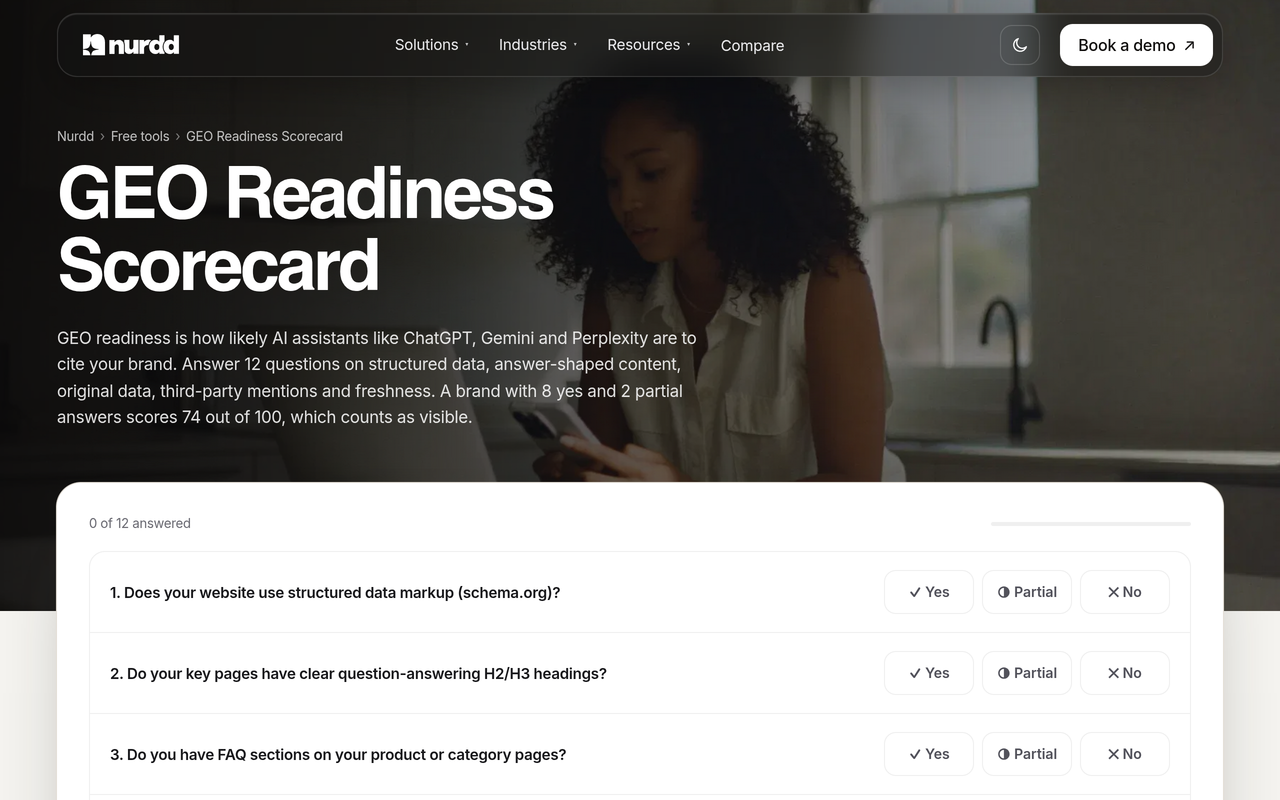
If you want a quick read on your site before starting, the free GEO readiness scorecard runs a 12-factor check of readiness for AI answers.
What mistakes sink an AI search marketing plan?
- Changing the prompt set mid-quarter. It breaks the trend line. Add new prompts as a separate group and report them separately.
- Tracking one engine. Similarweb's data shows the engine mix moving within a year, so a single-engine baseline can mislead.
- Starting with schema or llms.txt. Google says neither is needed to appear in its generative AI features. Fix answers and access first.
- Judging by traffic alone. Influence often appears as direct or branded visits, so mention rate needs to sit beside referral numbers.
- Skipping the third-party workstream. Owned pages are only part of what engines read, so leaving out earned sources caps your gains.
- Buying mentions in bulk. Google's guidance says inauthentic mentions are less helpful than they look, and low-quality placements can hurt trust.
- Changing everything at once. Without a holdout, you will never know which change moved the numbers.
How does Noma supply the baseline and weekly measurement?
Noma by Nurdd is the measurement layer for this plan. It tracks 13 AI engines, including ChatGPT, Gemini, Perplexity and Claude, polled daily, and records whether your brand is named and which page each citation comes from. That gives you the week 2 baseline, the citation list for the third-party workstream and the weekly trend for reporting, from one dashboard. Noma also shows a competitor comparison and recommendations for improving AI visibility.
Noma offers a 3-day free trial. A card is taken at signup and billing starts on day 3; cancel before then and you are not charged. For teams that want hands-on help with the content and source work, Nurdd also offers answer engine optimization services, measured in Noma.
Book a demo at nurdd.club/demo and see your own brand's baseline: which of the 13 engines name you today, which competitors they name instead, and which pages they cite.
If you are comparing platforms before committing, our comparison of AI search visibility tools and the Noma vs Peec AI page set out what each one tracks.
How we researched this
This guide was written by Simran Rawat. We reviewed three existing 90-day and AI search strategy plans (a HubSpot guide, a Semrush template page and a week-by-week plan from Deepak Gupta), Google Search Central documentation, OpenAI's crawler documentation, a Pew Research Center analysis, Ahrefs and Similarweb publications, and a Peec AI blog discussion. All pages were checked on the publication date in November 2026. We did not run hands-on tests of other vendors' products, and the worked example uses invented round numbers, labelled as such. Facts about Noma come from Nurdd's own product information.
Conclusion
An AI search marketing plan works when it is boring: a fixed prompt set, a frozen baseline, a short list of fixes, a source-driven outreach plan and a weekly review. Run measurement first, fix access and answers second, earn mentions third, and reset at day 90 with the data in hand.
To see the baseline for your own brand, book a demo of Noma. You will see which AI engines name your brand, which competitors they name instead and which sources they cite, so week 1 starts with real numbers. You can also read more at Noma.
Frequently asked questions
How do I build an AI search marketing plan?
Pick a fixed set of 30 to 50 buyer prompts, record where AI engines name your brand today, then plan fixes in three areas: technical access, page content and third-party mentions. Add a weekly review and a day 90 reset. The 13-week table above gives a week-by-week version you can copy.
What should an AEO plan include for the first 90 days?
It should include a baseline, crawler and analytics fixes, rewrites of the pages that answer your priority prompts, an outreach list of sources the engines cite, and a reporting rhythm. Each workstream needs an owner and a success test. Leave out low-value extras such as llms.txt until the core work is done.
How long does it take to see results from AI search work?
We have no verified figure to give, and results vary by site, category and engine. What you can do is measure early: weekly checks on a fixed prompt set show whether mention rate is moving, usually before referral traffic does. Use the holdout test to separate your changes from outside noise.
Which AI engines should I track first?
Track several, starting with the ones your buyers use. Similarweb's 2026 data shows ChatGPT's share of generative AI visits falling while Gemini grows, so a single-engine view can mislead. Noma tracks 13 AI engines, including ChatGPT, Gemini, Perplexity and Claude, so one prompt set covers them all.
Do I need llms.txt or special schema for this plan?
No. Google's guidance says Google Search does not use llms.txt and that no special schema is needed for its generative AI features. Structured data is still useful for ordinary rich results, so add it if it fits your SEO work, but do not make it the first task.
Who should own an AI search marketing plan?
Give one person the overall plan, usually an SEO or marketing manager, and name separate owners for content, technical fixes and third-party mentions. The mentions owner often sits in PR, partnerships or influencer marketing. The weekly review should take no more than 20 minutes and involve all four.
Is AI search traffic enough to measure success?
No. AI referral traffic is worth tracking in analytics, but an AI answer can influence a buyer who later arrives as a direct or branded visit. Pair referral numbers with mention rate and citation share. A Noma demo at nurdd.club/demo shows those measures for your own brand.