AI Search Visibility
Entity Consistency for AI Citations: Brand Profile Checklist
A checklist of the profiles and facts to align so AI engines describe your brand correctly, with a way to check what they say today.
 Sheetal Shakshi9 Nov 202616 min read

Entity consistency for AI citations means your site, structured data and public profiles state the same name, domain, description and ownership, so AI engines can match them to one brand. It reduces conflicting facts but does not guarantee a citation. Write one identity record, align your profiles to it, add Organization markup with sameAs, and track how engines describe you before and after.
Entity consistency for AI citations means every public profile of your brand states the same name, domain, description and relationships, so AI engines can match them to one entity and describe it correctly. It does not guarantee a citation. It removes the conflicting facts that make an engine hedge, merge you with another company or leave you out.
This guide gives you the profiles to audit, the facts to align, a decision table for what to fix first and a way to check how engines describe your brand today. It uses Nurdd's own brand facts as the worked example.
Key takeaways
- Write one approved identity record first: name, legal name, domain, one-line description, parent and product relationships, founding year, contact and official profiles.
- Align the facts that identify you (name, domain, category, ownership). Let tone and length vary by platform.
- Add Organization structured data with sameAs links to your official profiles, and keep it matching what those profiles say.
- Fix the profiles you control and that engines can read first: your site, LinkedIn, app stores, directories, marketplaces and, where you qualify, Wikidata.
- Measure before and after: run the same prompts on a schedule and compare each answer with your identity record.
- Treat consistency as hygiene, not a hack. Independent AI systems decide what to cite.
Does consistent brand information across profiles help AI citations?
It helps in a specific, limited way. When your site, social profiles and directory listings agree, an AI engine has less conflicting evidence to reconcile, so a description of your brand is more likely to be accurate. LSEO's guidance on this topic is careful on the limit: it calls brand consistency an identity-governance problem, not an AI citation hack (LSEO, October 2026), and says a cleaner footprint does not guarantee an AI system will cite or recommend you.
That is the right frame. Consistency is the precondition for being described correctly. Whether you are cited at all depends on the content, the sources engines trust and the question being asked. If your main problem is absence rather than inaccuracy, read why your brand isn't showing up in ChatGPT answers alongside this guide.
What is an entity, and why do AI engines get brands wrong?
An entity is a distinct thing an engine can identify: a company, a product, a person, a place. Engines build their picture of an entity from many pages. When those pages disagree, the engine either picks one version, blends them or avoids naming you.
Drift is the usual cause, and it is rarely deliberate. LSEO lists the common patterns: an old domain that survives a migration, a marketplace still using a previous product name, a partner describing a subsidiary as the parent, and a departed executive still listed on an event site. Each is a small contradiction, and together they give an engine several versions of one brand to choose from.
| Drift type | Example | What an AI answer may do |
|---|---|---|
| Name drift | Old product name on a marketplace, new name on your site | Treat them as two products or use the outdated name |
| Domain drift | Profiles still link to a retired domain | Cite or link the wrong URL |
| Category drift | LinkedIn says "agency", site says "software" | Place you in the wrong comparison set |
| Relationship drift | Parent and product described as one company | Attribute a product's features to the wrong entity |
| People and fact drift | Old leadership, founding year or contact details | State stale facts with confidence |
The first step is to see which of these your brand has. That means knowing what engines say now, before you change anything.
How do I make AI engines describe my brand correctly? A step-by-step checklist
Work through these eight steps in order. Each has an action, an expected result and a reason, so you can tell whether it worked.
Step 1: Record how AI engines describe you today
Action: choose 10 to 15 prompts a buyer would use (a brand-name question, a category question, a comparison question) and run them across the engines that matter to you. Save each answer with the date. Result: a baseline showing which facts are wrong, missing or outdated. Why: without a baseline you cannot tell whether later fixes changed anything. The prompt list in which prompts to track for AI search visibility is a good starting point.
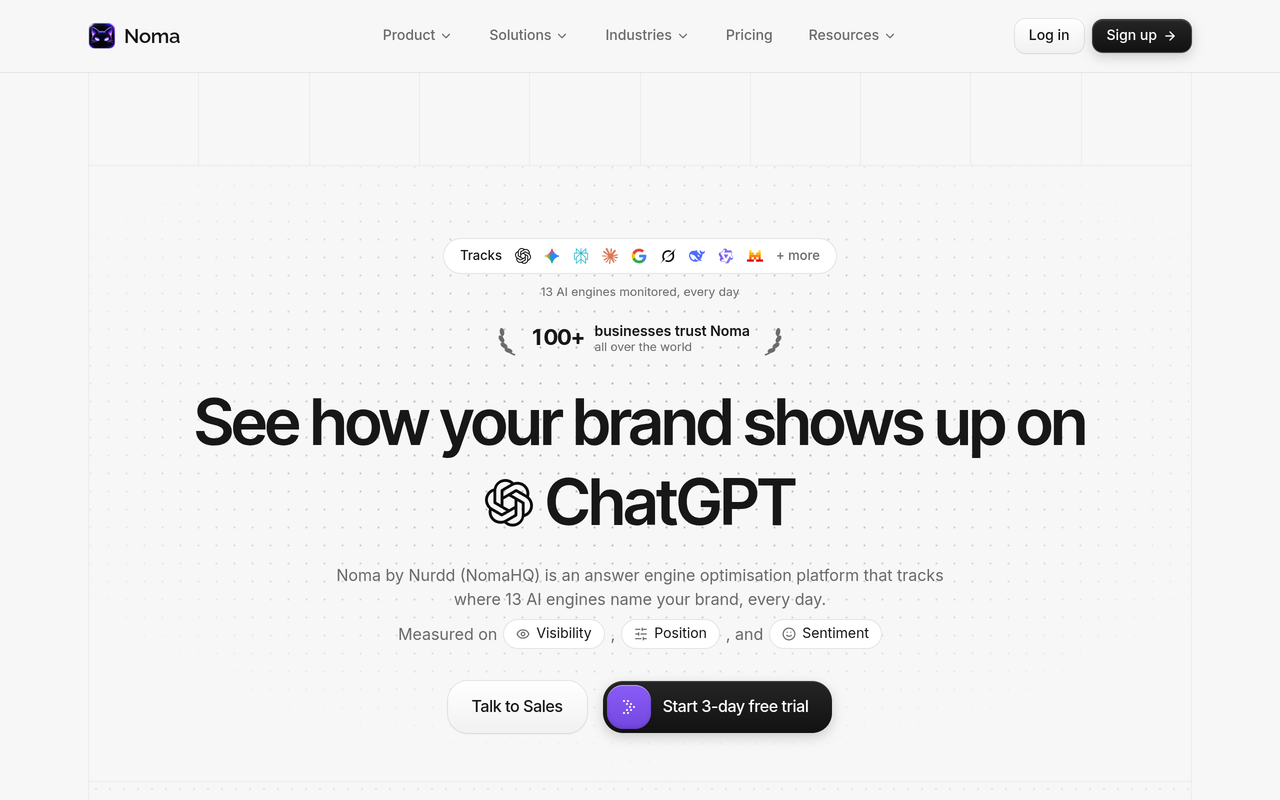
Noma by Nurdd automates this at nomahq.app. Noma tracks 13 AI engines, including ChatGPT, Gemini, Perplexity and Claude, polled daily, and records whether your brand is named and which page each citation comes from. You then read the answers against your identity record, which is the manual comparison in step 2.
Step 2: Write the approved identity record
Action: create a single document, owned by one named person, with the facts in the table below. Result: one reference every profile can be checked against. Why: LSEO recommends defining the current identity before auditing the external web, because you cannot find inconsistency without a standard.
| Field | What to record | Keep identical everywhere? |
|---|---|---|
| Public brand name | Exact spelling, capitalisation, spacing | Yes |
| Legal name | Registered company name | Yes, wherever shown |
| Alternate and former names | Abbreviations, old names, how to refer to them | Yes, as labelled alternates |
| Primary domain | One canonical URL with HTTPS and chosen www or non-www form | Yes |
| One-line description | Category, what you make, for whom (under 30 words) | Core claim yes, wording may vary |
| Parent and product relationships | Which products belong to which company | Yes |
| Founding year | Year only | Yes |
| Contact | Public support email, address or service area if relevant | Yes |
| Official profiles | The list of URLs you own | Yes, it feeds your sameAs list |
Step 3: Fix your own website first
Action: make the About page, footer, contact page and homepage state the identity record in plain sentences, with the entity named in full. Result: a source page an engine can quote without guessing. Why: your site is the one source you fully control, and the other profiles will be checked against it. Guidance on writing it is in how to write a brand description AI engines can use.
Step 4: Add Organization structured data with sameAs
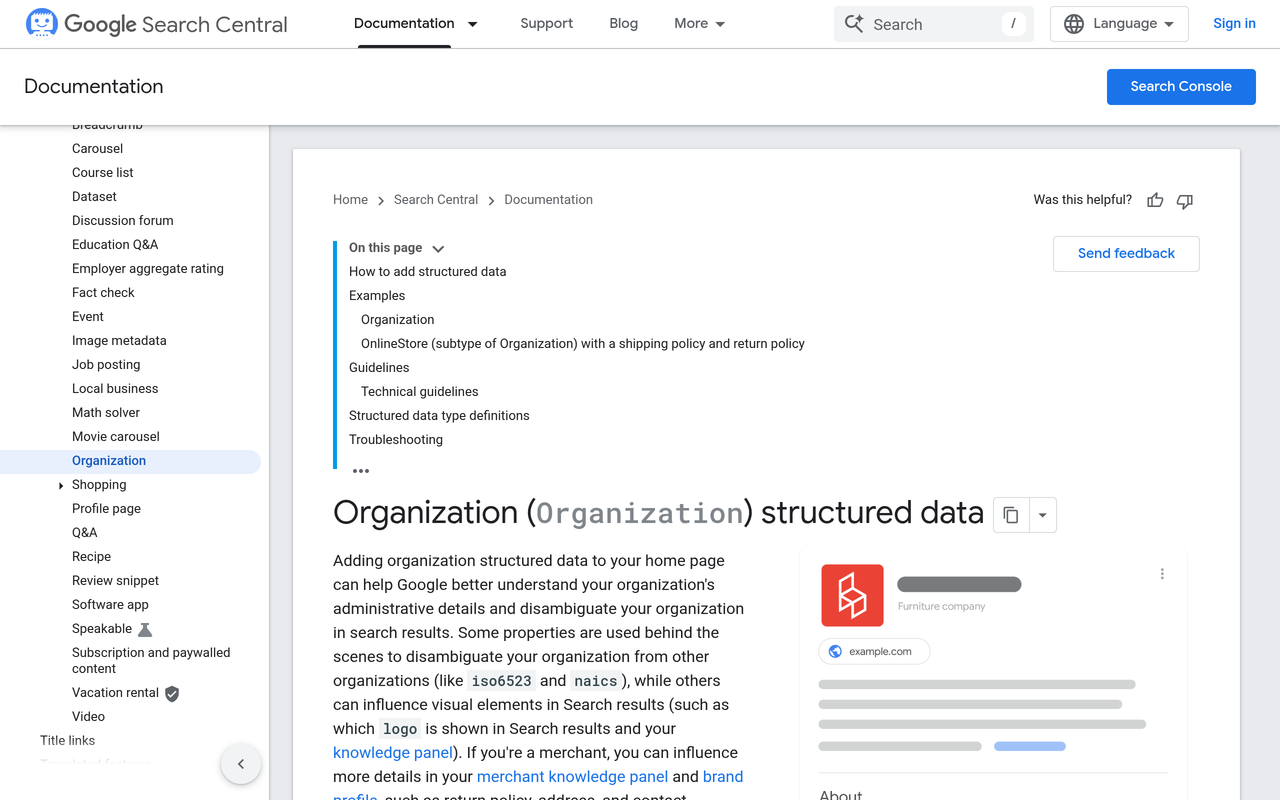
Action: put Organization markup on your homepage or About page with name, alternate name, URL, logo, contact details and a sameAs list of your official profile URLs. Result: a machine-readable statement of who you are and which profiles are yours. Why: Google's documentation says Organization markup on your home page helps Google understand administrative details and disambiguate your organization (Google Search Central).
Google recommends focusing on properties that are useful to users, such as name or alternateName for the business name, address or telephone for real-world presence, and url or logo for online presence. Its own example includes a sameAs array of profile URLs. Only list profiles you actually control and keep up to date, because a sameAs link to a stale page spreads the drift you are trying to remove.
Implementation detail, including schema choices for ecommerce, is covered in schema markup for D2C brands and AI search.
Step 5: Align the profiles you control
Action: update each profile in the priority table below so the name, domain, category and description match the record. Result: the same identity on every surface a buyer or engine might read. Why: these are the pages engines most often see next to your own site.
| Profile or directory | Facts to align | Priority | Where to fix |
|---|---|---|---|
| Website About and footer | Name, legal name, description, relationships, contact | 1 | Your CMS |
| Organization schema | Name, URL, logo, sameAs, contact | 1 | Site template |
| LinkedIn company page | Name, domain, category line, founding year | 1 | Page admin |
| Instagram, X, YouTube, TikTok | Name, handle pattern, bio line, link in bio | 2 | Each account |
| App Store and Google Play listings | Developer name, app name, description, support URL | 2 (if you have an app) | Store consoles |
| Google Business Profile | Real-world name, address or service area, category, website | 1 (if you have a location) | Business Profile |
| Software and review directories | Product name, category, owner, pricing page URL | 2 | Vendor portals |
| Wikidata item | Instance of, official website, social IDs, founded date | 3 (only if eligible) | Wikidata |
| Press boilerplate and speaker bios | Company description, executive titles | 3 | Comms team |
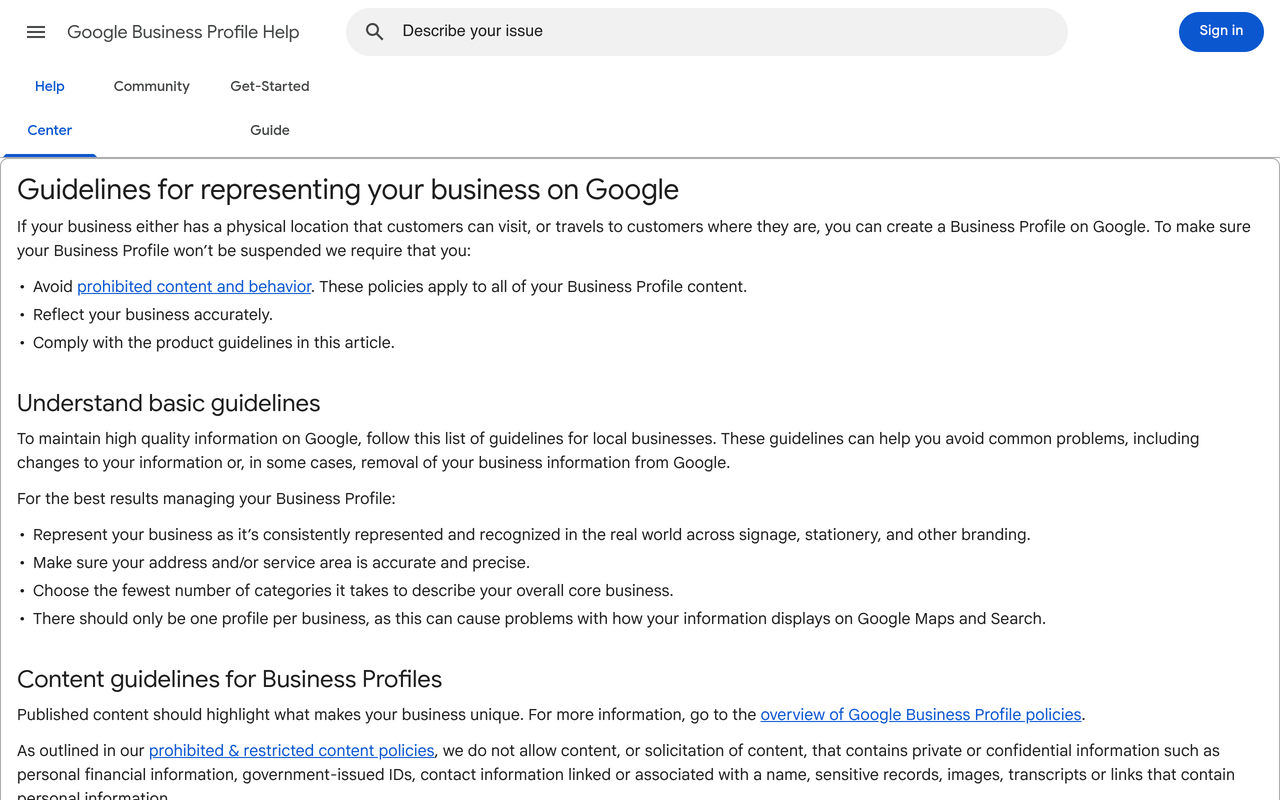
Google's Business Profile rules are a useful model for every profile: the name should reflect the real-world name as used consistently on your storefront, website and stationery (Google Business Profile Help). Adding keywords or taglines to the name field is not allowed there and is a bad habit elsewhere, because it creates a second version of your name.
Step 6: Handle Wikidata and other knowledge bases carefully
Action: check whether your company meets Wikidata's notability policy, and if it does, create an item that states the facts from your record and cites independent references. Result: a structured public record with a stable identifier that you can add to sameAs. Why: it gives machines a neutral, structured statement of your identity that does not depend on your own pages.
Do not create an item unless you meet the policy. Items that do not meet it are normally deleted, and self-promotional edits damage trust. Declare any conflict of interest and cite sources that are independent of you. For the mechanics, see Wikidata and sameAs for brands.
Step 7: Correct third-party mentions you do not control
Action: list the outside pages that state wrong facts, ranked by how often they appear as citations in your tracking. Ask each owner for a correction, supplying the identity record and one link to your About page. Result: fewer contradicting sources. Why: LSEO advises auditing by importance rather than trying to normalise every mention, since a brand can appear on thousands of sites. Start with the pages engines actually cite.
Step 8: Re-run the prompts and compare
Action: after your changes, repeat the baseline prompts on a fixed schedule and score each answer against the record. Result: evidence of what changed and what did not. Why: engines update at different speeds, and answers vary between runs, so one check proves little. A four-week routine is laid out in track your brand on ChatGPT weekly, and GEO experiment design explains how to avoid reading noise as progress.
How do I check how AI engines currently describe my brand?
Use a repeatable description audit. It needs no special software, although tracking makes it faster. Take each saved answer and score it on five questions against your identity record.
- Is the brand name spelled and written as in the record?
- Is the category correct, so you appear alongside the right competitors?
- Are ownership and product relationships right (which company makes which product)?
- Is any fact stale, such as a former name, old domain or outdated offer?
- Which source does the answer rely on, and is that source one you can fix?
Give each answer a pass or fail per question. Group the failures by source page, because one wrong directory listing often explains several wrong answers. That grouping is your fix list for step 7.
Answers differ by user and context, so treat a single reading as a sample. Does personalization change AI answers? explains why you should track patterns across many runs. For scoring how often you are named against competitors, see AI search share of voice and AI brand perception tracking.
Worked example: an identity record for Nurdd
The record below uses facts Nurdd publishes about itself. It shows how a parent company with three separate products avoids the relationship drift described earlier.
| Field | Nurdd record |
|---|---|
| Public name | Nurdd |
| Legal name | Nurdd Solutions Private Limited |
| Founded | 2026 |
| Primary domain | nurdd.club |
| One-line description | Nurdd is an AI marketing intelligence company that makes three separate products. |
| Products and owner | Nia (AI-native creative studio, getnia.studio), Noma (AI search visibility, nomahq.app) and Pulse (Meta and Google Ads intelligence, nurdd.club/pulse), all made by Nurdd |
| Official profiles for sameAs | LinkedIn company page, Instagram account (nurdd.app), app store listing under the name Nurdd |
| Contact | support@nurdd.club |
The main risk this record controls is relationship drift. If a directory describes Noma as "Nurdd's dashboard" without naming the other two products, or lists Nia under a different parent, an engine can merge three products into one. The record states that they are separate, so every profile can be checked against one sentence.
The same record gives the sameAs list and the Wikidata statements. It also names the one action still open for Nurdd: deciding whether the company meets Wikidata's notability policy before an item is created.
Which facts matter most, and which can vary?
A consistency program fails when it turns into copy-pasting one paragraph everywhere. LSEO makes the distinction clearly: identity facts should stay stable, while length, tone and emphasis can change by platform. Use this decision table when you are unsure whether to standardise a field.
| Question | If yes | Example |
|---|---|---|
| Does the fact identify who you are? | Standardise exactly | Name, domain, legal name |
| Would a contradiction change which company or product an engine names? | Standardise exactly | Parent and product relationships |
| Does it describe what you do in a category? | Keep the core claim the same, vary the wording | "AI search visibility tracking" |
| Is it persuasive or audience-specific? | Let it vary | Taglines, calls to action |
| Is it time-bound? | Review on a schedule | Offers, team lists, product lines |
Use the table as a rule for deciding whether a difference between two profiles is a defect or a deliberate adaptation. Only defects go on the fix list.
What are the most common mistakes?
- Standardising everything. Identical boilerplate on every profile reads as spam and does not address real conflicts.
- Stuffing keywords into names. Google's Business Profile rules prohibit unnecessary information in the business name, and the same logic applies to social handles and directory titles.
- Listing profiles you do not maintain in sameAs. A neglected profile with old facts undermines the markup.
- Forcing a Wikidata item. Without independent references, the item is likely to be removed.
- Fixing once. LSEO is explicit that the solution is governance rather than a one-time cleanup.
- Judging by one prompt. Answers vary, so judge by repeated runs.
How does Noma help with entity consistency?
Noma by Nurdd, at nomahq.app, is a web dashboard that tracks whether a brand appears in answers from 13 AI engines, including ChatGPT, Gemini, Perplexity and Claude, polled daily. It records whether the brand is named and which page each citation comes from. That gives you the baseline in step 1, the source pages for step 7 and the repeat measurement in step 8.
Want to see this for your own brand? Book a demo and you will see which AI engines name your brand, which pages they cite and how your answers compare with your competitors.
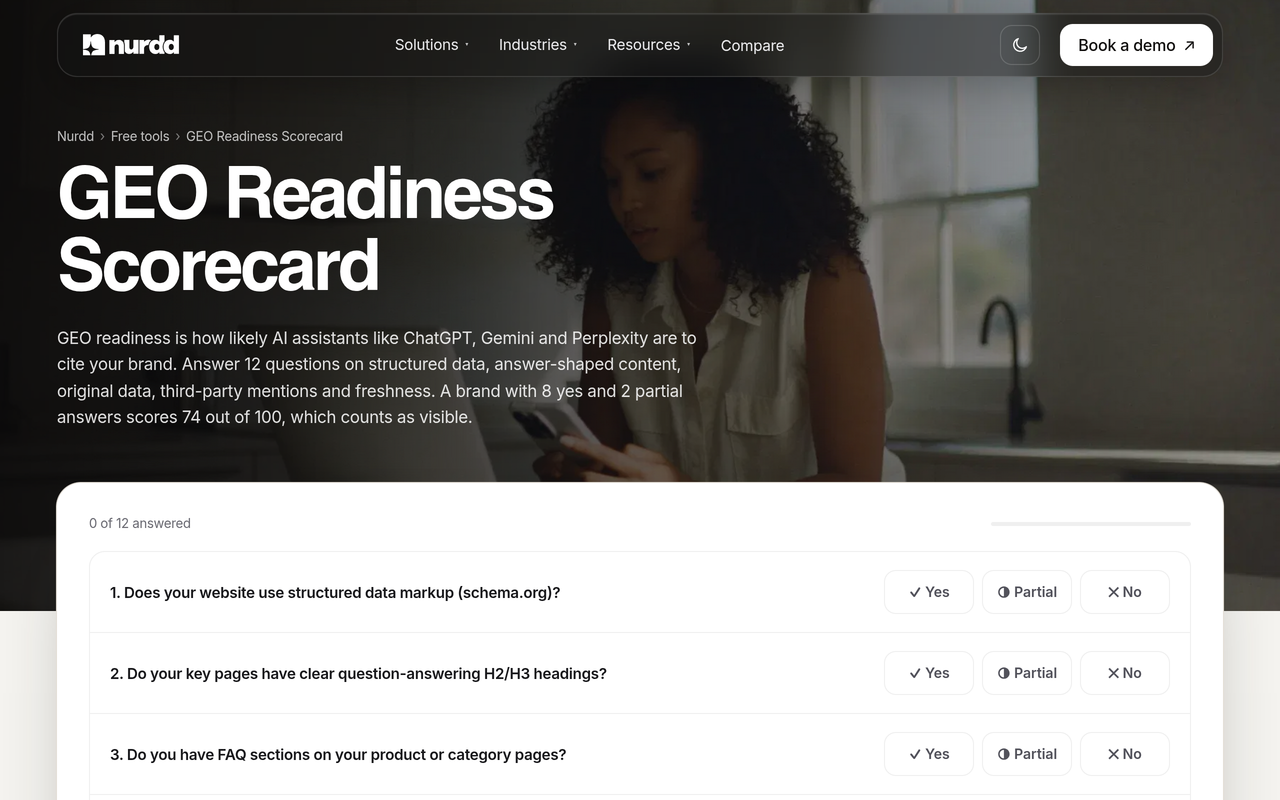
If you want a quick self-check first, the free GEO readiness scorecard covers 12 factors. Teams that prefer to hand the work over can use Nurdd's generative engine optimization services, measured in Noma. Noma has a 3-day free trial; a card is taken at signup, billing starts on day 3 and you are not charged if you cancel before then. See also how the four Nurdd capabilities fit together.
Who should own each part of the work?
LSEO notes that ownership of public brand surfaces is usually fragmented: brand teams manage the style guide, SEO manages parts of the site, communications supplies bios, sales manages partner directories and product marketing controls marketplace listings. If nobody owns the relationship between those surfaces, drift is predictable. Name one owner for the identity record and assign each surface to a team.
| Surface | Typical owner | Trigger to update |
|---|---|---|
| Identity record | Head of marketing or brand | Any change to name, domain, ownership or category |
| Site copy and Organization markup | SEO or web team | Rebrand, domain move, new product |
| Social and app store profiles | Social and product marketing | New product name, new positioning line |
| Directories and marketplaces | Partnerships or sales | Pricing page change, product rename |
| Press boilerplate and bios | Communications | Leadership change, acquisition, funding news |
| Prompt tracking and scoring | Whoever owns AI visibility reporting | Monthly review |
What is a quarterly maintenance checklist?
After the first cleanup, run this short list each quarter. It keeps the record current without a new project each time.
- Open the identity record and confirm every field is still true.
- Check that the homepage Organization markup still matches the record and that every sameAs URL loads and belongs to you.
- Visit each priority 1 and 2 profile and compare name, domain, category and description.
- Search for your brand and former names and list any new third-party pages that state facts about you.
- Review your tracked prompts, score the answers with the five description-audit questions and group failures by source.
- Send correction requests for the highest-impact outside pages, with the record attached.
- Log what changed, so the next review can compare against it.
How do the signals relate to each other?
Each layer does a different job, and none replaces the others. Your site states the facts. Structured data labels them for machines. Profiles and directories repeat the same facts in places you do not host. A knowledge base such as Wikidata, where eligible, offers an independent record. When all four agree, an engine has one story to tell; when they disagree, you are asking it to choose.
Brand consistency does not mean copying one paragraph everywhere. It means the facts that identify you never change from source to source, and everything else is free to adapt.
That distinction also protects you from over-claiming. Consistency across profiles is a sensible, low-risk practice that Google's own documentation supports for disambiguating organizations. The step from there to "this will get us cited" is not one any source we reviewed supports, so measure it for your own brand rather than assume it.
The last point is practical. You can only fix what you can see, which is why the measurement step comes first and last. Teams that skip it tend to polish profiles that no engine reads while the one wrong directory listing that engines keep citing stays untouched.
How does this fit with the rest of an AI visibility program?
Entity consistency is the base layer. It works with content that engines can quote, with the sources they trust and with technical access. A sensible order is: fix identity, then improve the pages engines read, then earn third-party coverage.
- Content: how to write website content AI engines quote.
- Trust: why AI engines trust some websites more.
- Freshness signals: author and dateModified signals.
- Vocabulary: the AI search glossary and what generative engine optimization is.
If you are comparing tracking tools before you commit, Noma vs Profound and the AI search visibility tools comparison set out the differences.
How we researched this
We reviewed Google Search Central's Organization structured data documentation, Google Business Profile Help guidelines and a published guide on brand consistency from LSEO, and combined them with Nurdd's own published brand facts. Pages were checked on the publication date of this article. We did not run hands-on tests, interviews or customer studies, and we cite no statistics because we found none we could verify. Wikidata's own policy pages were not accessible during research, so check its notability rules directly before creating an item.
Frequently asked questions
How do I make AI engines describe my brand correctly?
Write one identity record, then make your site, structured data and main profiles match it. Check how engines describe you now, fix the pages they cite, and repeat the same prompts on a schedule. Correct descriptions are not guaranteed, but conflicting sources are the most fixable cause of wrong ones.
Does consistent brand information across profiles help AI citations?
It reduces conflicting evidence, which helps engines describe you accurately. It does not guarantee a citation, since engines also weigh content and source trust. Treat it as groundwork rather than a shortcut.
What is sameAs and do I need it?
The sameAs property lists URLs of other pages that represent the same entity, such as your official profiles. Google's Organization documentation includes it in its example markup. You do not strictly need it, but it states clearly which profiles are yours.
Do I need a Wikidata item?
Only if your organization meets Wikidata's notability policy and you can cite independent sources. If it does not, focus on your website, structured data and the directories you can legitimately claim. Never create an item solely for promotion.
Which profiles should I fix first?
Start with your website, Organization markup, LinkedIn and, if relevant, Google Business Profile and app stores. Then move to directories and review sites that appear as cited sources in your tracking.
How often should I audit my brand profiles?
Review on a regular schedule and after any rebrand, product rename, domain move, acquisition or leadership change. Those events cause most drift. Re-run your tracked prompts at the same time.
Can Noma show how AI engines describe my brand?
Noma tracks 13 AI engines, including ChatGPT, Gemini, Perplexity and Claude, and records whether your brand is named and which pages are cited. You compare the answers with your identity record. A 3-day free trial is available, with a card taken at signup.
How long until AI answers change after I fix profiles?
No source we reviewed gives a reliable timeline, so we do not offer one. Engines refresh at different speeds and answers vary between runs. Track weekly and judge the trend.
Next step
Aligning profiles is the cheap part. Knowing what engines say about you is what tells you where to start. Book a demo of Noma and we will show you, for your own brand, how 13 AI engines currently name and describe it, which pages they cite and which profiles to fix first.