What a Healthy Google Ads Account Looks Like vs What Most D2C Brands Actually Have
 23 Jun 20267 min read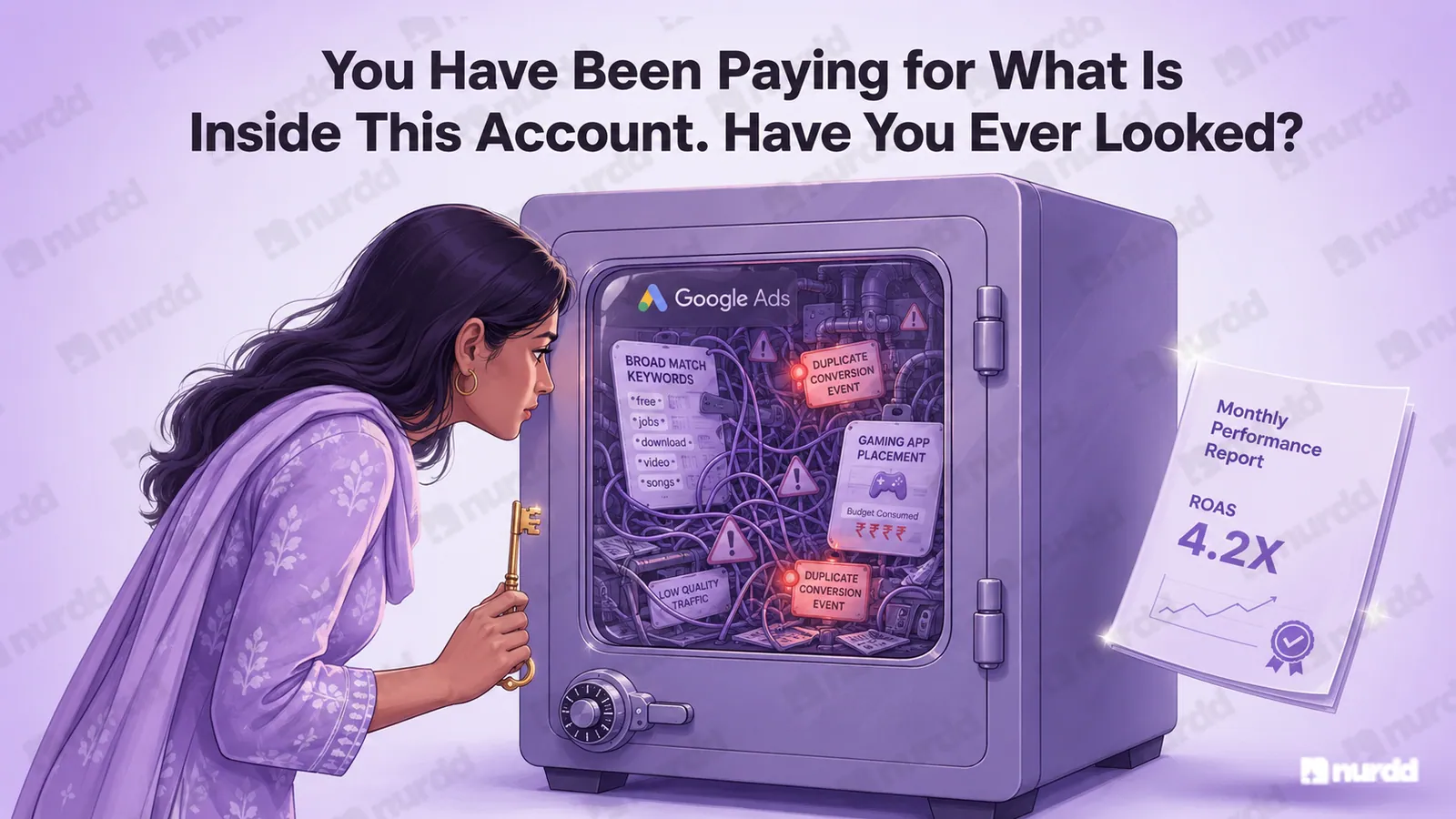
A healthy Google Ads account separates campaigns by intent and product, uses controlled match types and negatives, verifies purchase-value tracking, excludes poor placements, and reports branded and non-branded performance separately. Most D2C accounts mix everything together, rely on defaults, lack exclusions, and hide weak non-branded results behind blended ROAS.
If you've never managed Google Ads yourself, you're in a difficult position. You're paying for something you can't easily evaluate. The reports your agency sends show clicks and ROAS, but they never show you what's actually inside the account the decisions that were made, the corners that were cut, and the ongoing cost of both.

Campaign Structure
Healthy account: Campaigns are separated by intent stage and product type. One campaign for brand terms. One for category search terms. One for competitor terms if you're bidding on them. Shopping campaigns separated from Search. Display and YouTube as separate campaigns with their own budgets.
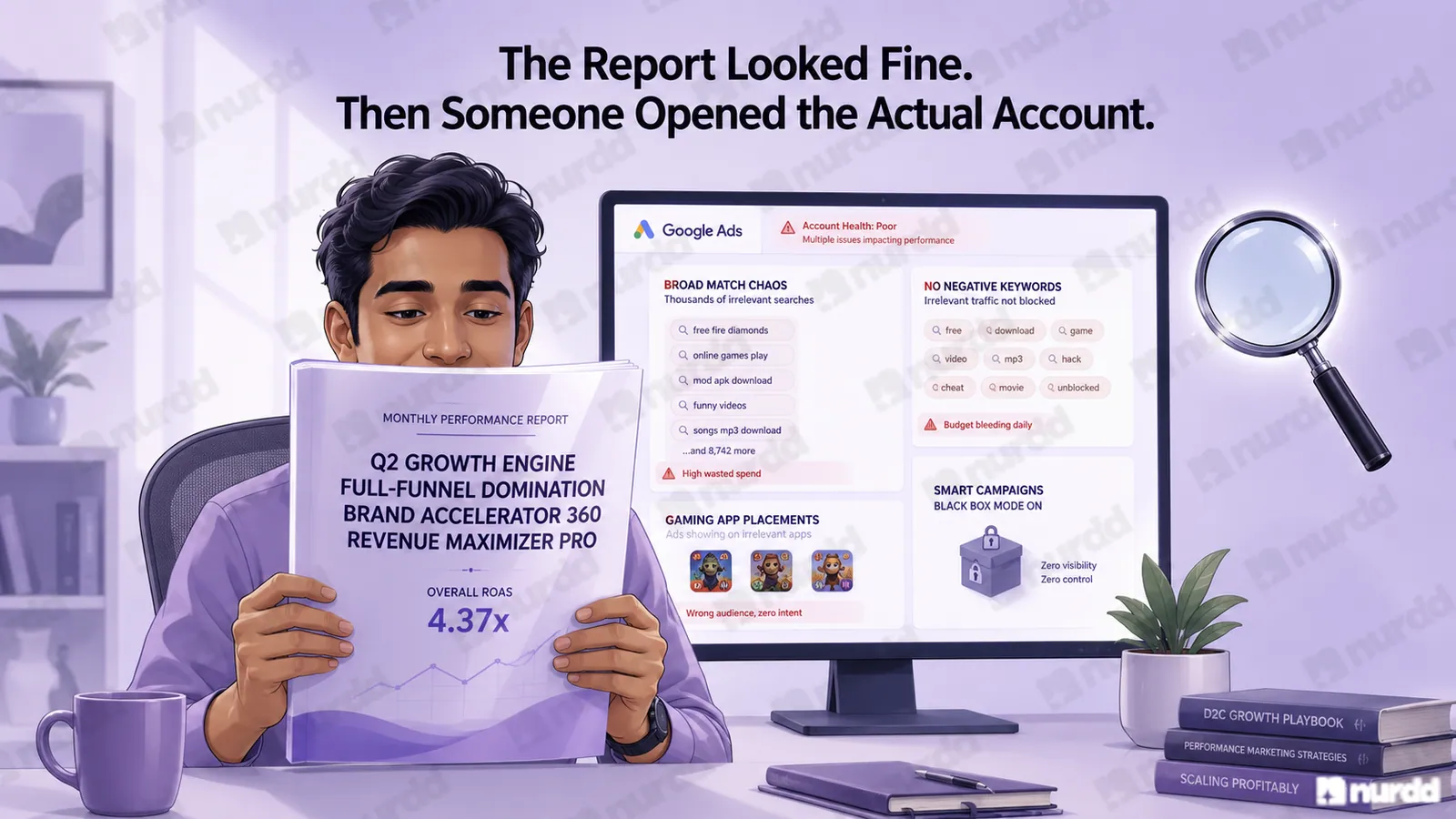
Most D2C accounts: One "All Products" campaign with 12 ad groups and 200+ keywords, mixing branded, category, and competitor terms all in one budget pool. Smart Campaigns set up during initial setup with no visibility into where money goes.
Keyword Strategy
Healthy account: Phrase match and exact match for high-intent terms. Broad match used deliberately with a negative keyword list that's 150+ terms deep. Search Term Report reviewed every two weeks.
Most D2C accounts: Primarily broad match because they generate more impressions. No negative keyword list, or a default list of 15 generic terms from day one that was never touched. Budget being consumed by searches like "how to make [product] at home" and "free [product]."
Bidding and Conversion Tracking
Healthy account: Bidding strategy matched to campaign objective. Purchase event firing properly and verified. Revenue values passing with each conversion so Google knows actual value, not just a count. Attribution model reviewed and understood.
Most D2C accounts: Everything on Maximise Conversions because those are the defaults. Duplicate conversion events sometimes firing one from the website tag and one from Google Analytics inflating conversion numbers by 30 to 40 percent and making ROAS look better than it is.
Negative Placements and Honest Reporting
Healthy account: Display campaigns have a placement exclusion list covering mobile game categories and low-quality content networks. ROAS reported separately for branded and non-branded campaigns.
Most D2C accounts: Display running across the full network with zero exclusions. Branded search ROAS of 15x blended with non-branded ROAS of 1.8x produces a headline ROAS of 4.2x that nobody is questioning. Ask for the branded vs non-branded split. Ask to see the Search Term Report. The account that can answer quickly is probably well-run. The one that pivots to showing you the ROAS dashboard isn't.
A Google Ads account is one of the easiest places to look busy, spend efficiently at the surface, and waste money in the detail. Most clients never see the detail.
Sources & References
Google Ads Help Centre — Best Practices for Campaign Structure (2026): https://support.google.com/google-ads/answer/6154846
Search Engine Journal — Google Ads Account Audit Checklist 2025: https://www.searchenginejournal.com/google-ads-audit/
Wordstream — Google Ads Grader Benchmarks and Common Account Issues: https://www.wordstream.com/google-adwords
PPC Hero — Conversion Tracking Verification Guide Google Ads: https://www.ppchero.com/google-ads-conversion-tracking/
Seer Interactive — Branded vs Non-Branded Search Performance Analysis: https://www.seerinteractive.com/blog/branded-vs-non-branded-search

Find the right creators — and verify they're real.
Nia gives brands access to 10M+ Indian creator profiles, TruAI fake follower detection, pre-spend ROI forecasting, and product-level sales attribution. Completely free.