AI Search Visibility
How to Get ChatGPT to Recommend Your Brand
A practical guide to the evidence ChatGPT draws on, the on-site and off-site work that raises your odds, and how to measure progress with Noma.
 Sheetal Shakshi29 Oct 202617 min read

To get ChatGPT to recommend your brand, let OpenAI's search crawler read your site, state plainly what you are and who you serve, and earn mentions on the third-party pages ChatGPT already cites. There is no form or paid placement for organic answers, so you track progress by repeating a fixed set of buyer questions over time.
To get ChatGPT to recommend your brand, let OpenAI's search crawler read your site, state plainly what you are and who you serve, and earn mentions on the third-party pages ChatGPT already cites. There is no form to submit and no paid placement in organic answers. What you can do is supply clear evidence, then measure whether it works.
This guide explains what evidence ChatGPT draws on, why it may recommend your competitors instead of you, and a seven-step plan covering on-site work (entity clarity, comparison pages, crawler access) and off-site work (third-party mentions, reviews, product feeds). It ends with a measurement routine you can run with Noma by Nurdd, plus a checklist and a diagnosis table you will not find in most articles on this topic.
Key takeaways
- Check crawler access first: OpenAI says sites opted out of OAI-SearchBot will not be shown in ChatGPT search answers.
- Write one plain sentence that names your brand, category, audience and differentiator, and repeat it identically on your site and your profiles.
- Look at which third-party pages ChatGPT cites for your category questions, then work to be included on those pages rather than only publishing on your own blog.
- Build comparison and use-case pages that answer the literal question a buyer types, with your brand name in the same paragraph as the claim.
- Measure with a fixed prompt set repeated on a schedule, because single answers vary and a one-off check misleads.
- Treat published studies as correlations: in Ahrefs' two studies, web mentions and video mentions stood out more than link metrics, but no study proves a guaranteed recommendation.
What evidence does ChatGPT actually use when it recommends a brand?
ChatGPT draws on two broad kinds of evidence: what its underlying model learned during training, and what it retrieves from the live web when it searches. For recommendation questions such as 'best project tool for freelancers', the retrieved pages matter most, because they are the ones you can influence quickly and the ones ChatGPT shows as sources.
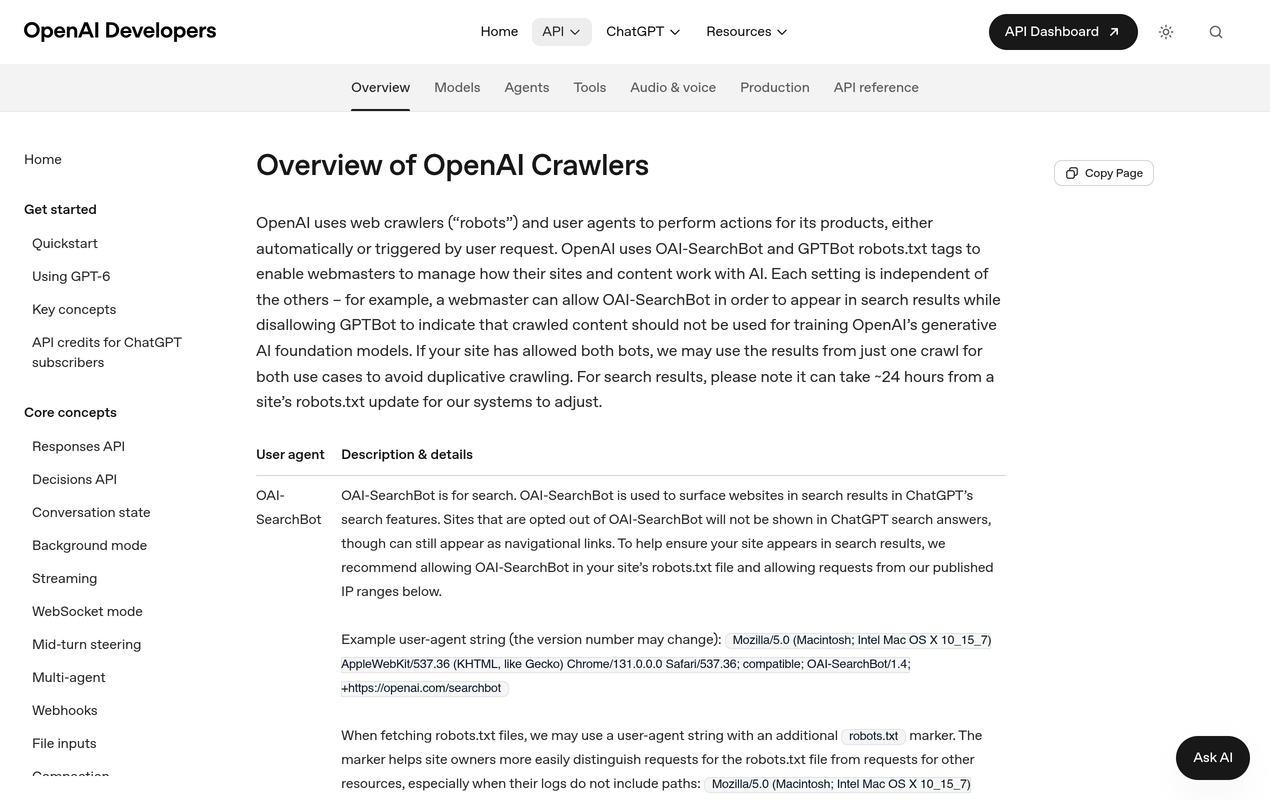
OpenAI documents the crawler behind that retrieval. In its OpenAI crawler documentation, 2026, the company states that OAI-SearchBot is used to surface websites in ChatGPT's search features, and that sites opted out of it will not be shown in ChatGPT search answers, though they can still appear as navigational links. The same page says each bot setting is independent, so a site can allow OAI-SearchBot while disallowing GPTBot, which relates to training.
For shopping queries, OpenAI describes a similar pattern. In its OpenAI shopping research announcement, November 2025, the company says results are organic and based on publicly available retail sites, reading product pages directly, citing sources and avoiding low-quality or spammy sites. It also points merchants to an allowlisting process to make sure they are eligible to appear.
Taken together, the evidence ChatGPT can use falls into four groups: your own pages (if the crawler can read them), third-party pages that discuss you, review and retail pages that describe your products, and whatever the model absorbed about your brand in training. The rest of this guide works through each group in order of how quickly you can change it.
Why does ChatGPT recommend my competitors and not me?
ChatGPT recommends competitors when the pages it retrieves describe them more clearly, more often and in more places than they describe you. It is rarely about one missing tag. Use the table below to match what you see to the likely cause and the first fix.
| What you see | Likely cause | First fix | Step in this guide |
|---|---|---|---|
| Your brand never appears, and your site is never cited | Crawler blocked, or key facts hidden in JavaScript or images | Allow OAI-SearchBot, check CDN rules, put facts in plain HTML | 2 |
| ChatGPT names you but describes the wrong category | Inconsistent brand description across the web | Write one canonical sentence and align every profile | 3 |
| Competitors appear for 'best X for Y' questions | They are on the roundups and comparison pages ChatGPT cites | Audit the cited URLs and pursue inclusion | 5 |
| You appear for your name but not for category questions | No pages tie you to a use case or audience | Publish use-case and comparison pages | 4 |
| Product cards show rivals, not you | Product pages thin, feed or reviews weak | Complete product data, reviews and allowlisting | 6 |
| You appeared last week and not this week | Normal answer variation, or a shift in cited sources | Measure repeatedly rather than once | 7 |
The breakdown of why competitors get cited in AI answers goes deeper on the pattern, and the guide to brands missing from ChatGPT answers covers the case where you are absent entirely.
What do published studies say about brand mentions, links and ChatGPT visibility?
The most useful public evidence is correlational, so read it as direction rather than proof. Ahrefs has published two relevant studies, and they should not be merged. The first, an Ahrefs study of 75,000 brands, May 2025, looked at Google's AI Overviews only. It found moderate to weak correlations between link metrics and brand mentions: Domain Rating at 0.326, referring domains at 0.295 and backlinks at 0.218. Ahrefs concluded that online brand mentions appear to be more impactful than link building.
The second is a newer, updated analysis. A write-up by The Next Web, May 2026 reports that Ahrefs found YouTube mentions to be the strongest correlated signal for AI visibility across ChatGPT, Google AI Mode and AI Overviews. That write-up describes branded web mentions as the top signal in an earlier version of the study, so the finding has shifted as the analysis was extended to more engines.
Ahrefs' May 2025 analysis of AI Overviews found brand mentions appeared more impactful than link building, and its updated analysis, reported in May 2026, found YouTube mentions the strongest correlated signal across ChatGPT, AI Mode and AI Overviews.
The practical reading: the 2025 correlations apply to AI Overviews, not to ChatGPT specifically, but the 2026 update does include ChatGPT and points the same way. If your plan for ChatGPT is only to build backlinks to your homepage, you are probably optimising the weaker signal. Spread your brand name, with a consistent description, across the places buyers and publishers already talk about your category, including video.
Worked example: how fast can cited sources shift?
The Semrush most-cited domains study, November 2025 shows why one-off checks mislead. It reports that ChatGPT cited Reddit in close to 60% of prompt responses in early August, falling to around 10% by mid-September, a drop of about 50 percentage points in roughly six weeks. The same study says Reddit and Wikipedia remained ChatGPT's two most-cited domains in the period it examined.
What this means for you: a strategy that depends entirely on one source type, such as forum threads, can lose most of its reach when the retrieval mix changes. A balanced plan covers your own site, editorial roundups, reviews and video, and a measurement routine that notices the change when it happens.
How do I get ChatGPT to recommend my brand? A seven-step plan
Each step below follows the same pattern: the action, the result you should see, and why it works. Do them in order, because steps 1 and 2 tell you whether steps 3 to 6 are worth doing first.
Step 1: Record what ChatGPT says about you today
Action: Write 20 to 30 questions a buyer would ask before choosing in your category, without using your brand name. Mix four types: 'best X for Y', 'alternative to [leader]', 'X vs Y', and a specific use case. Run each in ChatGPT and log whether you are mentioned, in what position, and which URLs it cites.
Result: a baseline mention rate and a list of the pages ChatGPT trusts for your category.
Why: Without a baseline you cannot tell whether later work moved anything. The guidance from sources such as ClickForest and What The Bot Said also starts with a fixed question set, which is a sign the practice has become standard.
Step 2: Make sure ChatGPT's crawler can read your site
Action: Open your robots.txt and confirm OAI-SearchBot is allowed. Then check your CDN or firewall: a bot-protection rule can block a crawler even when robots.txt allows it. OpenAI publishes IP ranges so you can allowlist its crawler, and states that robots.txt changes can take about 24 hours to take effect for search.
Result: your pages become eligible to be surfaced in ChatGPT search answers.
Why: OpenAI's documentation says opted-out sites will not be shown in its search answers. You can allow OAI-SearchBot and still disallow GPTBot if you do not want content used for training, because the settings are independent.
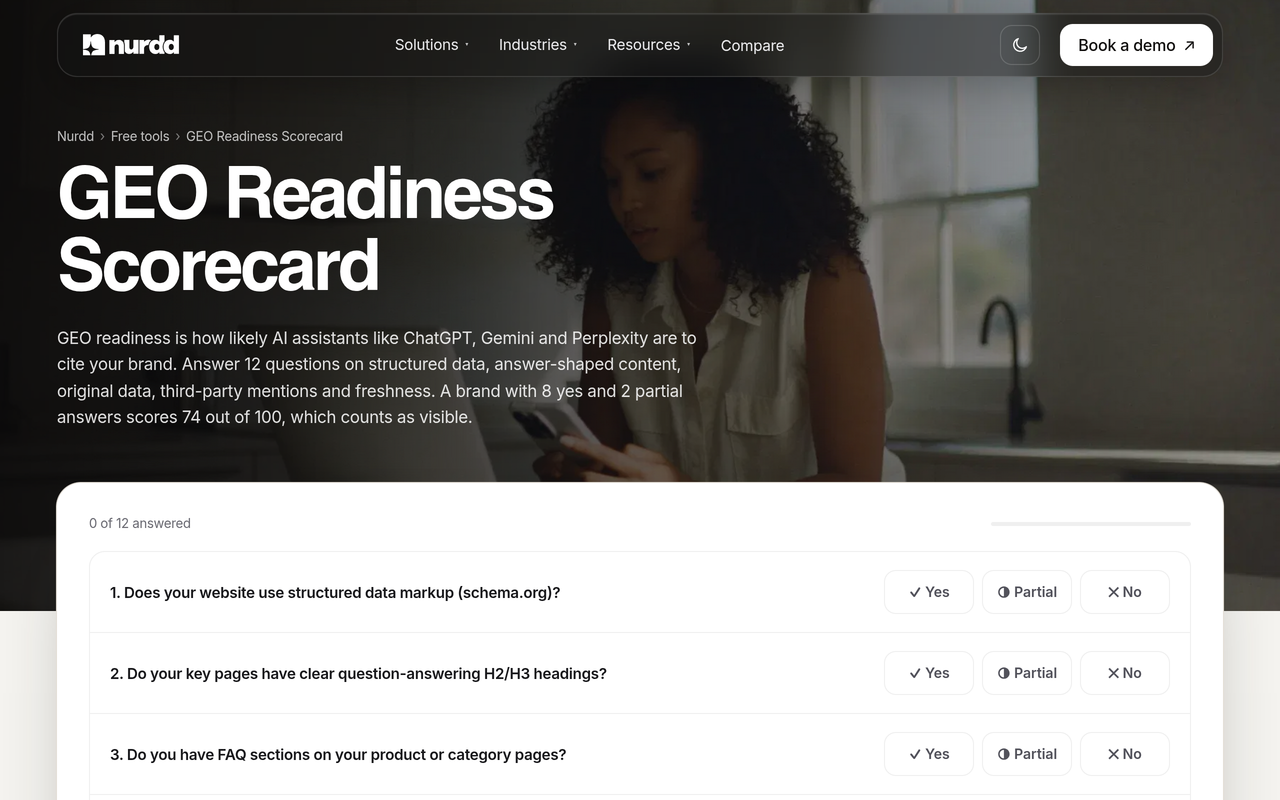
Also put key facts into plain HTML: your one-line description, who you serve, plan names, pricing where you publish it and main features. Text that only loads through JavaScript or sits inside images is easy for a retrieval system to miss. The free GEO readiness scorecard gives you a 12-factor check before you invest further.
Step 3: Write an entity definition and use it everywhere
Action: Draft one sentence in the form 'Brand is a [category] for [audience] that [differentiator]'. Place it at the top of your homepage, your about page, your product pages and your social and directory profiles, with only minor variation.
Result: ChatGPT meets the same description from many places, which reduces the chance it files you in the wrong category.
Why: Models and retrieval systems build an association between a name and a description from repeated, consistent text. Be Found Online makes the same point: brands tightly linked to a specific use case are the ones that get mentioned for 'best for this situation' questions, per its guide to increasing the odds of a ChatGPT mention.
If your current description is vague, the guide to writing a brand description AI engines can use has examples. Add structured data to support it; the schema markup guide for D2C brands lists the types worth implementing.
Step 4: Publish comparison and use-case pages that match literal questions
Action: For each of your top five buyer questions from step 1, create a page with the question as the heading, a 40 to 60 word direct answer at the top, a comparison table, and your brand name in the same paragraph as the claim you want cited.
Result: pages that ChatGPT can lift as a self-contained answer.
Why: Retrieval favours passages that make sense out of context. A sentence that says 'it works well for small teams' cannot be attributed; a sentence that names the brand, the audience and the reason can. The guide to sentence structure that gets quoted shows the pattern, and the FAQ page guide covers how to turn customer questions into answerable sections.
Be accurate about rivals on comparison pages, using facts from their own public pages, and date the page. Honest, current comparisons are more likely to be trusted by both readers and retrieval systems than one-sided claims. You can see how this looks in practice on Nurdd's own comparison pages.
Step 5: Earn mentions on the third-party pages ChatGPT already cites
Action: Take the cited URLs from step 1 and sort them into types: editorial roundups, forum threads, review sites, video, and publications. For each, decide what inclusion looks like: a pitch to the roundup author, a genuinely useful answer in a forum thread, a profile on the review site, or a creator video that names you.
Result: your brand appears in the evidence set ChatGPT retrieves, not only on your own pages.
Why: Both Ahrefs studies point to mentions outside your own site as stronger correlates of AI visibility than link metrics, the 2025 one for AI Overviews and the 2026 update across ChatGPT as well. Impact Plus notes in its guide to being recommended on ChatGPT that ChatGPT often references review and directory sites when recommending software or services, and recommends asking happy customers for reviews and seeking inclusion in roundups.
Creator content is part of this. A creator video or post that names your product and explains who it suits can become a third-party mention, which is why the guide to briefing creators for AI-cited content and the piece on getting mentioned in AI answers without ads are worth reading together.
Step 6: Strengthen reviews and product data for shopping queries
Action: If you sell products, make each product page complete: clear title, specifications, price, availability, images and genuine reviews. Check OpenAI's merchant allowlisting process, linked from its shopping research announcement, so your product pages are eligible to be read.
Result: product pages that meet the constraints of a detailed shopping query such as price, material or use.
Why: OpenAI states that its shopping research reads product pages directly and cites sources, and it measures product accuracy as the percentage of products in each response that meet the user's requirements. A page that states the requirement plainly is easier to match.
The guide to product descriptions that AI engines cite covers wording, and the ecommerce industry page shows how Nurdd's products fit that category.
Step 7: Measure with a fixed prompt set, repeated on a schedule
Action: Keep your step 1 questions unchanged. Re-run them weekly, several times each, and record mention rate, position, cited URLs and which competitors appear. Track the numbers across 13 AI engines, including ChatGPT, Gemini, Perplexity and Claude, because a change that helps in ChatGPT may differ elsewhere.
Result: a trend line you can tie to the work you shipped.
Why: Answers vary between runs and the cited-source mix can shift quickly, as the Semrush Reddit figures show. Only repeated measurement separates a real gain from noise. The week-over-week AI visibility tracking guide and the weekly ChatGPT tracking experiment show the routine in practice.
Which signals should I work on first? A decision table
Use this table to decide where your next hour goes. Effort and speed are judgements based on how each lever works, not measured figures.
| Lever | Evidence it matters | Speed to change | Effort | Do it first if... |
|---|---|---|---|---|
| Crawler access (OAI-SearchBot) | OpenAI documentation: opted-out sites are not shown in search answers | About 24 hours after a robots.txt update, per OpenAI | Low | Your site is never cited |
| Plain-HTML facts | OpenAI says shopping research reads product pages directly | Days | Low to medium | Key facts sit in scripts or images |
| Entity definition | Use-case clarity is a recurring theme in practitioner guidance | Weeks | Low | ChatGPT misdescribes you |
| Comparison and use-case pages | Passages that stand alone are easier to attribute | Weeks | Medium | You appear only for your own name |
| Third-party mentions | Ahrefs (May 2025, AI Overviews): mentions appeared more impactful than link building; Ahrefs update (May 2026, per The Next Web): YouTube mentions strongest | Months | High | Competitors dominate roundups |
| Reviews and product data | OpenAI shopping research cites product pages and sources | Weeks to months | Medium | You sell physical products |
| Measurement | Semrush (November 2025) shows citation mix can shift in weeks | Immediate | Low | You cannot tell if anything works |
What does a measurement routine look like with real numbers?
A routine needs a denominator. Below is a template with illustrative arithmetic, not a result from any real brand: it shows how to calculate a mention rate you can compare week to week.
- Fix 20 prompts. Run each 3 times in ChatGPT, giving 60 answers.
- Count answers that mention your brand. Suppose 9 do: 9 divided by 60 is a 15% mention rate.
- Count answers that cite one of your own URLs. Suppose 4: a 6.7% citation rate.
- Record the three most-cited third-party URLs. These become your step 5 target list.
- Repeat weekly with the same prompts. Compare the rate, not individual answers.
Doing this by hand across one engine is manageable. Doing it daily across 13 engines is where a tool earns its place, which is what the next section covers.
How does Noma help you track whether ChatGPT recommends you?
Noma by Nurdd is a web dashboard that tracks whether a brand appears in answers from 13 AI engines, including ChatGPT, Gemini, Perplexity and Claude, polled daily. It shows citation frequency by category, a competitor comparison and actionable recommendations to improve AI visibility. For a team following this guide, Noma replaces the manual spreadsheet in steps 1 and 7 and shows which competitors appear where you do not.
Book a demo at nurdd.club/demo and you will see how your own brand and your main competitors appear across the AI engines for your category questions, and which recommendations Noma would prioritise first.
Noma has a 3-day free trial. A card is taken at signup and billing starts on day 3; cancel before then and you are not charged. You can start at nomahq.app. If you are weighing options first, the comparison of AI search visibility tools and pages such as Noma vs Profound and Noma vs AthenaHQ set out the differences.
A checklist you can follow this month
- Write 20 to 30 buyer questions that do not name your brand.
- Run them in ChatGPT and log mentions, positions and cited URLs.
- Confirm OAI-SearchBot is allowed in robots.txt.
- Check CDN and firewall rules for bot blocking and allowlist OpenAI's published IP ranges.
- Move your key facts into plain HTML text.
- Write one entity sentence and apply it to your site and every profile.
- Publish five question-led pages with a 40 to 60 word answer at the top.
- List the third-party URLs ChatGPT cited and mark which ones could include you.
- Request reviews from real customers and complete product pages.
- Re-run the prompt set weekly and track the mention rate.
For a deeper audit, the AEO audit checklist for D2C brands extends this list, and the guide to checking whether your site answers like AI engines expect helps with step 7 on the page side.
What mistakes stop brands getting recommended?
- Judging by one answer. ChatGPT answers vary between runs, so a single screenshot proves nothing in either direction.
- Blocking the wrong bot. Disallowing GPTBot is a training choice; disallowing OAI-SearchBot removes you from search answers.
- Writing only for your own blog. If the cited pages are third-party roundups and reviews, your own posts alone will not change the evidence set.
- Vague brand copy. Phrases like 'all-in-one solution' give a model nothing to match against a specific question.
- Chasing links over mentions. In Ahrefs' May 2025 AI Overviews study, link metrics showed moderate to weak correlations, and mentions appeared to matter more.
- Ignoring accuracy. The Columbia Journalism Review's Tow Center found in its 2024 ChatGPT search test that no publisher was spared inaccurate representation of its content, so check what ChatGPT says about you, not only whether it does.
Engines differ too. The comparison of Perplexity, ChatGPT and Gemini for brands explains why you should not assume a ChatGPT result carries over, and the complete guide to GEO covers the wider discipline.
What should you do this week?
Start with the two cheapest checks: confirm OAI-SearchBot is allowed, and run your questions to see who ChatGPT names today. Those two actions tell you whether your problem is access, clarity or third-party presence, and the diagnosis table points to the next move.
If you want that picture across 13 AI engines rather than one, book a Noma demo. You will see your own brand's visibility, the competitors that appear instead of you and the first recommendations to act on. You can also browse Nurdd's free tools in the meantime.
How we researched this
We reviewed OpenAI's own crawler and shopping documentation, published studies from Ahrefs (May 2025 and a May 2026 update reported by The Next Web) and Semrush (November 2025), a Columbia Journalism Review test of ChatGPT search, and four practitioner guides that rank for this topic. We checked every source in October 2026, and each figure is dated where it is cited. We did not run hands-on tests, interviews or customer studies for this piece, and the measurement template above uses illustrative arithmetic, not real results.
Frequently asked questions
How do I get ChatGPT to recommend my brand?
Allow OAI-SearchBot, describe your brand clearly and consistently, publish question-led comparison and use-case pages, and earn mentions on the third-party pages ChatGPT already cites. Then re-run a fixed set of buyer questions each week to see whether your mention rate rises. No tag or payment guarantees a recommendation in organic answers.
Why does ChatGPT recommend my competitors instead of me?
Usually because the pages it retrieves describe them more clearly and appear in more roundups, reviews and comparisons. Check whether your site is readable to the crawler, whether your description is consistent, and which third-party URLs ChatGPT cites for your category. The diagnosis table above maps each symptom to a fix.
How do I rank in ChatGPT answers?
ChatGPT answers are not a ranked list the way search results are, so the goal is to be included in the evidence it retrieves and named in the response. Work on crawler access, entity clarity, passages that stand alone and third-party mentions, then measure mention rate and cited URLs over time.
Does blocking GPTBot stop ChatGPT recommending me?
No. OpenAI's documentation says GPTBot and OAI-SearchBot are independent settings. GPTBot relates to training, while OAI-SearchBot is used to surface sites in ChatGPT search features. Blocking OAI-SearchBot is what removes you from search answers.
Do backlinks or brand mentions matter more for ChatGPT?
Ahrefs' May 2025 study of 75,000 brands found link metrics had moderate to weak correlations with AI Overview mentions, and mentions appeared more impactful; that study covered Google, not ChatGPT. An updated Ahrefs analysis reported by The Next Web in May 2026 includes ChatGPT and found YouTube mentions the strongest correlated signal. Both are correlational, so treat them as direction, and build mentions across publications, reviews and video.
How do I get my products into ChatGPT Shopping?
OpenAI says shopping research is organic and reads public retail product pages, citing sources. Make product pages complete and accurate, collect genuine reviews and follow OpenAI's merchant allowlisting process. Data quality matters because OpenAI measures whether products meet the user's stated requirements.
How long does it take to get recommended by ChatGPT?
Crawler changes can take about 24 hours to be picked up for search, per OpenAI. Content and third-party mention work takes longer, and no source gives a reliable timeline. Measure weekly so you can see the trend rather than guess.
Can I track whether ChatGPT recommends my brand automatically?
Yes. Noma by Nurdd polls 13 AI engines, including ChatGPT, Gemini, Perplexity and Claude, daily, and shows citation frequency, competitor comparison and recommendations. You can try it with a 3-day free trial; a card is taken at signup and billing starts on day 3.