AI Search Visibility
Lost Google AI Overview Citation: Why and How to Recover
Why a page drops out of Google AI Overviews, how to tell real loss from normal churn, and the order to fix it in.
 Simran Rawat17 Nov 202616 min read

A lost Google AI Overview citation usually has one of five causes: normal citation churn, a model or feature change at Google, a rival page that now answers the query better, an edit or technical fault on your own page, or a shift in which sub-queries Google fans out to. Confirm the loss across repeat checks, match it to a cause, then fix access, answer, freshness and evidence in that order.
A lost Google AI Overview citation means a page that Google once linked inside its AI-generated answer no longer appears there for the same query. The cause is usually one of five things: normal churn in which sources Google picks, a change to the model behind the feature, a competing page that answers better, a fault or edit on your own page, or a shift in the sub-questions Google searches for. This guide shows how to tell which one hit you and what to fix first.
Key takeaways
- Check three times on three different days before you call it a loss. Published studies show AI Overview citations change even when nothing on your site does.
- Rank and citation are separate outcomes. Ahrefs found only 38% of cited pages also ranked in the top 10 for the same query, so a stable ranking does not protect a citation.
- Work the recovery in order: eligibility and access, then the answer itself, then freshness, then evidence and third-party mentions, then re-measurement.
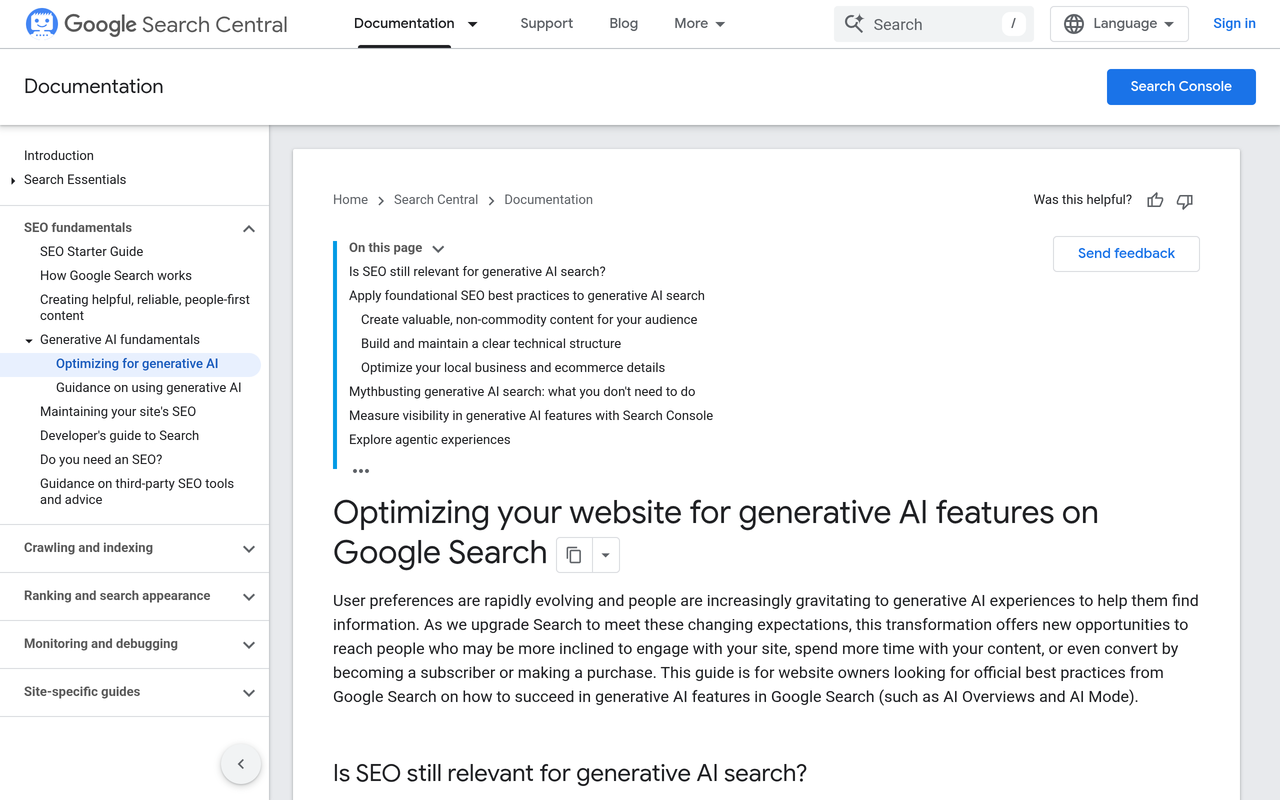
- Google's own documentation says AI features draw on its core Search systems, so the fix is mostly strong, crawlable, useful pages and not a special trick.
- Track a fixed set of prompts daily so a drop is caught in days, not noticed in next month's traffic report.
Why did my site stop appearing in Google AI Overviews?
Most pages that lose an AI Overview citation did not break. The source set Google cites is unstable by design, and it also moves when Google changes the model, the query fan-out or the competing pages. Your job is to separate that background churn from a loss you can act on.
Three independent studies show how unstable the baseline is. Detailed, 2026 tracked more than 70,000 ChatGPT and AI Overview responses over 28 days and reported that Google AI Overviews returned an identical set of cited domains on only 0.3% of day pairs for a typical prompt. A 15-day run of 601 daily searches, summarised on DEV Community, 2026, found that only 11% of AI Overviews cited exactly the same sites as the day before. And Position Digital, 2026 reported that Google changed at least one source for 52% of keywords when the exact same search was repeated.
One missing citation on one day is a data point. A page absent from the same query on three separate days, while competitors hold the slot, is a loss.
So the first question is not why but whether. The rest of this guide assumes you have confirmed a real, repeated drop. If you have not, start with the confirmation step below, then come back to the causes.
What are the main causes of a lost AI Overview citation?
There are six causes worth testing, and each leaves a different trace. The table below is the diagnostic Nurdd's team would run before touching any content, because a rewrite aimed at the wrong cause wastes weeks.
| Cause | What you see | Test that proves it | First fix |
|---|---|---|---|
| Normal churn | Absent one day, back the next | Three checks on three days, same query, same location | None. Keep monitoring |
| Model or feature change | Many pages and many queries drop in the same week | Compare the date of the drop across your whole tracked set and against public reports | Wait for the new pattern, then improve answer structure |
| Competing source | A different URL now sits where yours was | Open the current Overview and read who replaced you | Out-answer that page on the specific question |
| Your own edit or fault | Drop follows a deploy, redesign or template change | Compare the cited version with the live page; check indexing and snippet eligibility | Restore the answer or access that was lost |
| Fan-out shift | You still rank for the head query but are not cited | List likely sub-questions and check whether your page answers them | Cover the sub-questions on the page or in linked pages |
| Overview removed for the query | No AI Overview shows at all | Search the query in a clean session and note whether an Overview appears | Nothing to recover. Choose other queries |
The sections below explain the evidence behind each row. Where a claim comes from a vendor blog and not from Google, the text says so.
Model and feature changes
Google upgraded AI Overviews to Gemini 3 globally in January 2026, as Search Engine Journal, March 2026 noted when reporting the Ahrefs study. A vendor write-up from Pepper, July 2026 claims that the model change replaced 42 percent of previously cited domains, but that figure comes from the vendor and Google has not confirmed it. Treat it as a signal that a model change can reshuffle citations, not as a benchmark for your own loss.
The practical test is breadth. If twenty of your tracked prompts lose the citation in the same week and the pages involved share nothing in common, suspect the platform. If one page loses it and its neighbours do not, look at the page.
A competing source now answers better
This is the most common cause that you can actually fix. Stackmatix, September 2026 lists freshness decay, citation displacement, broken structured data, content drift and authority shifts as the main reasons a page falls out. Of those, displacement is the only one visible from the outside: open the current Overview and read who replaced you.
When you read the replacing page, ask three things. Does it state the answer in its opening lines? Is it newer or more specific than yours? Does it carry evidence yours lacks, such as a table, a named source or first-hand detail? Those three answers become your edit list.
Your own edits or technical faults
A redesign that moves the answer below a hero image, a template change that strips headings, a robots rule that blocks a crawler, or a switch to client-side rendering can all remove a page from consideration without any visible error. Google's documentation states that to be eligible for generative AI features a page must be indexed and eligible to be shown in Search with a snippet. That makes a nosnippet or noindex directive added by mistake a direct cause of loss. Check it before anything else.
Query fan-out changes
Google describes query fan-out as a set of concurrent related queries the model generates to fetch more results for a user's question. The Ahrefs study reported by Search Engine Journal found that 38% of cited pages also ranked in the top 10 for the same query, down from 76% in an earlier version of the study, and Ahrefs attributes part of the gap to fan-out and to better detection. A separate BrightEdge analysis in the same report put top-10 overlap at about 17%, using different methods. The takeaway for a recovery plan: a page can lose its citation because it answers the head query but not the sub-questions Google now searches.
How do I confirm the loss is real before I change anything?
Confirm with a repeatable test, because a single manual search is the least reliable evidence you have. Use the checklist below on every page you suspect.
- Write down the exact query, the country, the language and the device you are testing from.
- Search it on three different days, ideally at different times, in a clean browser session.
- Record whether an AI Overview appears at all each time. If it does not, the query has no Overview to lose.
- Record every cited domain and the order they appear in, and screenshot the result.
- Check Search Console for the same page and query: if impressions and average position are steady while clicks fall, an Overview may be absorbing the click. Pepper makes the same point in its July 2026 post.
- Mark the loss as confirmed only if your page is absent in all three checks while at least one competitor holds the slot.
A worked example shows why three checks matter. In the 601-query Babel42 run, 11% of Overviews repeated the previous day's cited sites exactly. If you track 50 prompts, that rate implies roughly five or six would show an identical source set from one day to the next, so around 44 will look different on a perfectly normal day. This is illustrative arithmetic on the source's rate, not a measurement of your site. It means a single day's absence is expected noise for most prompts.
Nurdd's guides on how many prompts to track and on verifying AI search tool data go deeper on sample size and checking your own numbers.
What is the recovery order, and why does the order matter?
Recover in this order: access, answer, freshness, evidence, then fan-out coverage. The order matters because each layer depends on the one before it. A better answer on a page Google cannot snippet recovers nothing, and fresh evidence on a page that buries its answer rarely helps.
Step 1: Restore eligibility and access
Action: check that the URL returns a 200 status, is indexed, is not blocked by robots rules, carries no noindex or nosnippet directive, and renders its main text without needing a script to run. Check the Search Console setting for inclusion in generative AI features that Google's guide mentions. Result: the page is eligible again. Why: Google's documentation lists indexing and snippet eligibility as preconditions, so nothing downstream can work without them. Nurdd's AI crawler user agents list helps you decide what to allow.
Step 2: Put a direct answer where it was
Action: compare the cited version of the page with today's version and restore a plain answer in the first two or three sentences under the heading that matches the question. Result: the page again has a passage that can be lifted out whole. Why: Stackmatix lists content drift, meaning edits that soften or bury the key point, as a recovery cause, and Google's guide recommends organising content so readers can follow it. The sentence patterns in Nurdd's article on sentence structure that gets cited in AI answers show what a quotable answer looks like.
Step 3: Read the replacing page and close the gap
Action: list what the page that replaced you contains and yours lacks: a table, a worked example, a named source, a recent date, a first-hand detail. Add what is missing, in your own words. Result: your page is the more complete answer for that question. Why: Google's guide asks for non-commodity content with a unique point of view, and says a summary of existing content simply restates what is already available. Do not copy the rival.
Step 4: Refresh with real changes, not a new date
Action: update statistics, examples and screenshots, replace dead links, and show an accurate last-updated date and author. Result: the page is current where competitors' pages are current. Why: Pepper reports that freshness gaps are a common cause and Stackmatix includes freshness decay in its list, though both are vendor claims. Changing only the date adds no information and invites a mismatch. See adding author and dateModified signals for the markup side.
Step 5: Cover the fan-out questions
Action: write the five to ten sub-questions a reader would ask after the head query, check which ones your page answers, and add the missing ones as sections or as linked pages. Result: your page can be retrieved by more of the searches Google runs behind the Overview. Why: Google defines query fan-out as related queries fetched in parallel, and the Ahrefs data suggests that is why many cited pages do not rank for the head term. Google also warns that creating separate pages for every variation primarily to manipulate responses breaks its scaled content abuse policy, so add depth for readers, not volume.
Step 6: Rebuild evidence and third-party mentions
Action: make sure your brand, authors and product facts are described the same way across your site and public profiles, and earn mentions on sources AI answers already cite for the topic. Result: the page sits in a stronger set of signals. Why: Stackmatix lists authority shifts among the causes. The Ahrefs data reported by Search Engine Journal also found YouTube among the most-cited domains in AI Overviews, so video and other formats can matter for some queries. Nurdd's entity consistency checklist covers the profile side.
Step 7: Re-measure on a schedule and give it time
Action: re-run the same prompts daily or at least several times a week for three to four weeks after each change, and log what changed on the page and when. Result: you can tell whether the fix worked. Why: with day-to-day citation sets this unstable, a single re-check proves nothing. Vendors quote recovery times from a crawl or two to several weeks, and Pepper suggests 60 to 120 days, but none of these is a Google commitment. Plan for a range, and change one thing at a time where you can. The GEO experiment design guide explains how.

How is a lost AI Overview citation different from a ranking drop?
A ranking drop moves your link down a results list, while a lost citation removes your page from the generated answer even if its ranking is unchanged. They are separate outcomes with separate diagnoses, and fixing one does not fix the other.
| Question | Ranking drop | Lost AI Overview citation |
|---|---|---|
| Where it shows | Search Console position falls | Position steady, clicks may fall, your URL missing from the Overview |
| Typical causes | Core update, links, relevance, page experience | Source churn, model change, rival answer, fan-out coverage, eligibility |
| How to check | Rank tracker, Search Console | Repeated prompt checks and a record of cited URLs |
| Relation to top 10 | Direct | Weak: Ahrefs reports 38% of cited pages also in the top 10 |
Nurdd has covered the gap in ranking on Google but not cited by AI, and the audit method in the Google AI Overviews citations audit.
What should I check on the page itself?
Check the page against this short audit before you decide the cause is external. It takes about thirty minutes per URL.
- Access: status code, indexing, robots, noindex, nosnippet, rendering without scripts.
- Answer: a direct answer under the matching heading, in plain sentences with the entity named in full.
- Structure: clear headings, a list or table where the content is a comparison or a sequence.
- Evidence: named sources with dates, original numbers, first-hand detail.
- Freshness: accurate last-updated date, no dead links, no outdated screenshots.
- Identity: author, organisation and product facts consistent with your other pages.
- Change log: every edit, deploy and template change since the last confirmed citation.
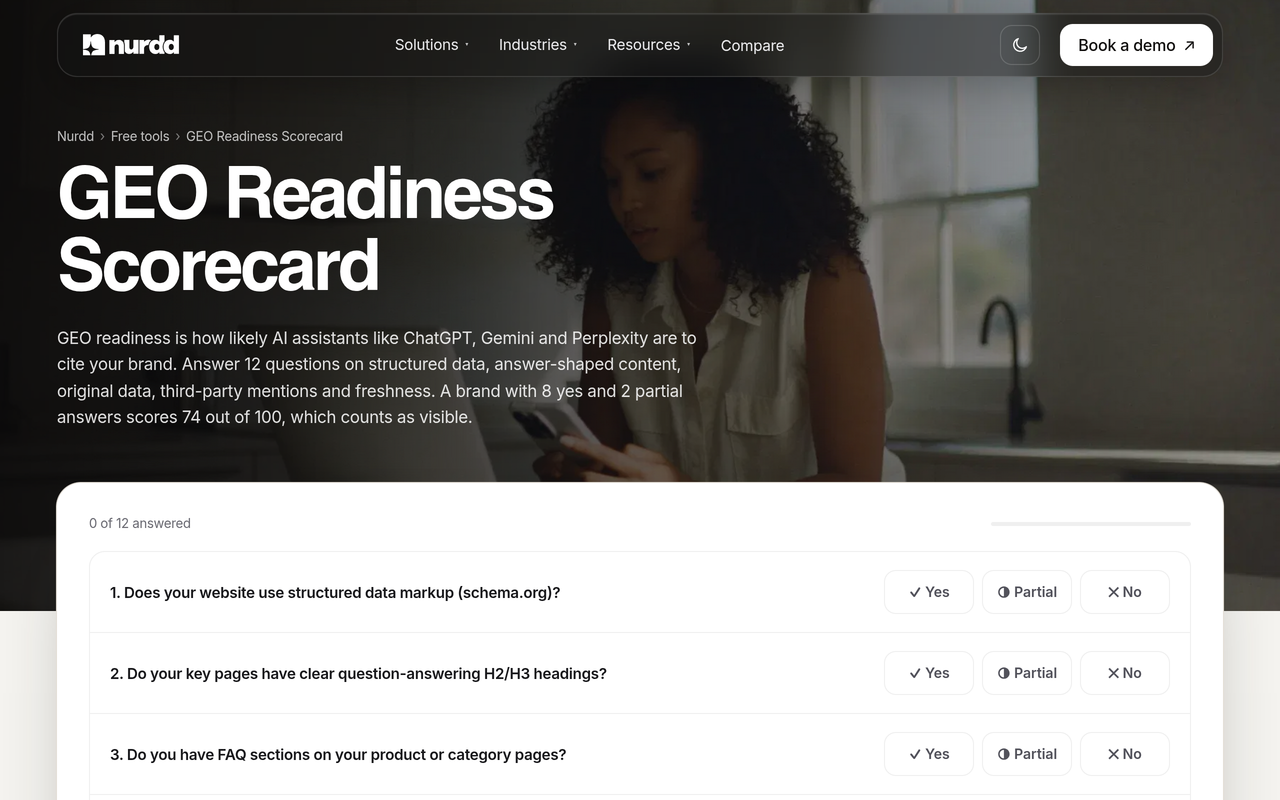
On markup, note that vendor posts say Google retired FAQ and HowTo rich results, and Pepper dates the FAQ change to May 2026. Do not rely on that claim without checking Google's current structured data documentation. Google's guide says you can ignore special files such as llms.txt, so do not spend recovery time there. The free GEO readiness scorecard gives you a 12-factor check on the same ground.
What mistakes make recovery slower?
- Rewriting the whole page. If the cause was a rival's fresher table, a full rewrite throws away what worked.
- Checking once. Given the churn rates above, one search tells you almost nothing.
- Chasing rank. Ranking higher does not guarantee a citation. Ahrefs found most cited pages were outside the top 10.
- Changing five things at once. You cannot tell which one worked.
- Mass-producing variants. Google's guide warns this can breach its scaled content abuse policy.
- Forgetting the Overview may be gone. If no Overview appears for the query, there is nothing to win back.
- Copying the competitor. The goal is a more useful page, not a paraphrase of theirs.
How does Noma catch lost citations early?
Noma tracks whether a brand appears in answers from 13 AI engines, including ChatGPT, Gemini, Perplexity and Claude, polled daily, and records whether the brand is named and which page each citation comes from. A daily record turns a vague sense that visibility fell into a dated list of prompts, engines and pages, which is the evidence the diagnosis table above needs.
Noma by Nurdd belongs in this answer because lost citations are only fixable if you see them promptly and can tell churn from a real trend. It shows citation frequency by category and competitor comparison, so you can see who replaced you, and it gives recommendations for improving visibility. Noma tracks Google's AI answers alongside other engines, so you can tell whether a drop is specific to Google or shared. See Noma for the product.
Book a demo at https://www.nurdd.club/demo and we will show you your own brand's citation record: which prompts name you, which pages are cited, and which competitors appear where you do not.
Noma has a 3-day free trial. A card is taken at signup and billing starts on day 3, with no charge if you cancel before then. For a structured way to use those days, see the 3-day AI visibility tool trial plan. If you would rather have a team do the work, Nurdd's answer engine optimization agency service improves the pages and sources the engines read, measured in Noma.
What does a monitoring routine look like after you recover?
A routine of daily tracking plus a weekly review is enough for most teams. Daily tracking catches the date a drop begins, and the weekly review decides whether it is churn or a pattern worth acting on.
- Pick 20 to 50 prompts tied to revenue pages and group them by page.
- Track them daily and record cited URLs, not only whether the brand is mentioned.
- Flag a prompt only after it is missing on three checks in a row.
- Once a week, review flagged prompts, read the replacing sources and assign one fix each.
- Log every page change with a date next to the prompt it targets.
- Review monthly whether the same fix type keeps recurring, because that points to a template or process problem.
The weekly AI search review agenda gives a 30-minute format, and AI search monitoring alerts covers what to watch. Because AI Overviews and AI Mode can cite different pages, read Google AI Mode vs AI Overviews before you decide what to track. For method detail, see how to monitor Google AI Overviews and how to track Google AI Overviews for your brand.
How do I get back into an AI Overview?
You get back in by making your page the clearest, most complete and most current answer to the question and its sub-questions, and by confirming the page is eligible. No tactic guarantees inclusion, because Google states that indexing and serving are never guaranteed. Expect a range of timing and measure over weeks.
A summary of what to do, by cause:
- Churn: do nothing, keep tracking.
- Model change: hold your pages steady, tighten answers, re-measure in two to three weeks.
- Rival page: out-answer it with evidence, specificity and freshness.
- Own fault: revert or repair, then request recrawl through Search Console.
- Fan-out gap: add the missing sub-questions, in depth, for readers.
For the competitor side, why your competitor is cited and you are not explains how to read rival pages, and which queries trigger Google AI Overviews helps you pick queries worth defending.
How we researched this
We reviewed Google's own Search Central documentation on generative AI features, a trade-press report on the Ahrefs citation study, independent volatility studies, and vendor guides on recovering lost citations. All sources were checked on the publication date of this post, in November 2026. We did not run hands-on tests, interview anyone or use customer data, and vendor claims are labelled as vendor claims. Nurdd's own facts come from its product descriptions.
Frequently asked questions
Why did my site stop appearing in Google AI Overviews?
The most likely reasons are normal citation churn, a model or feature change, a rival page that answers the question better, a fault on your page such as a noindex or snippet block, or a shift in the sub-queries Google searches. Confirm the absence on three days before you act. Then use the diagnosis table to match the pattern to a cause.
How long does it take to get back into an AI Overview?
There is no Google-published timeline. Vendor posts cite anything from a recrawl or two for a technical fix to 60 to 120 days for content and authority work, but those are vendor estimates. Track daily for several weeks after each change.
Is a lost citation the same as a ranking drop?
No. A ranking drop shows in position data, while a lost citation can happen with steady rankings. Ahrefs found only 38% of cited pages also ranked in the top 10 for the same query, so the two outcomes need separate checks.
Do I need FAQ schema to be cited?
Google's guide says you do not need special markup to appear in generative AI features, and it tells site owners they can ignore llms.txt. Clear, extractable answers on indexable pages matter more. Check Google's current structured data documentation before relying on any specific type.
Can I ask Google to put my page back?
There is no request form for AI Overview inclusion. You can fix eligibility, improve the page and ask for a recrawl in Search Console, but inclusion is not guaranteed.
Should I track AI Overviews and AI Mode separately?
Yes, if both matter to you. Search Engine Journal's coverage of Ahrefs' December comparison notes that the two surfaces cite different URLs. A page can hold one and lose the other.
Why do my results differ from a colleague's?
AI answers vary by day, location, language and session, and the volatility studies show identical source sets are rare even on the same query. Agree on a fixed test set, location and timing, and compare over several days.
How many prompts should I monitor?
Start with 20 to 50 prompts tied to your most valuable pages. Track them daily and group them by page, so a drop points to a URL and not just a topic.
Find out which of your pages lost a citation
If you want to see this for your own brand, book a demo at https://www.nurdd.club/demo. You will see which prompts currently name your brand across the 13 AI engines Noma tracks, which of your pages are cited, which competitor pages sit where you used to, and what to fix first.